
This English version may have been machine-generated from the Chinese original and may not convey the original meaning accurately.
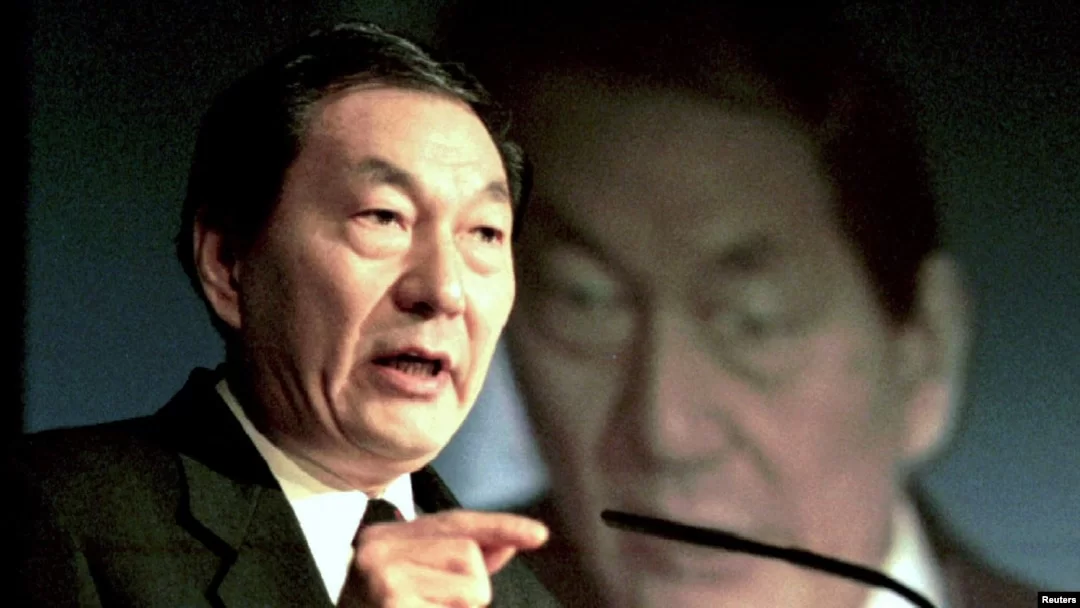
The news of Zhu Rongji's death has stirred a complex wave of nostalgia in public opinion—nostalgia for the sharpness he brought to driving state-owned enterprise reform, joining the WTO, and cleaning up financial order, and nostalgia for his outspoken, no-holds-barred public stance in denouncing bureaucratic malpractice. According to reports, at a time when avenues of expression have narrowed and economic growth has slowed under Xi Jinping's era, this nostalgia has been further amplified, even taking on a tinge of tragic sentiment suggesting that "today is worse than yesterday."
But this very nostalgia exposes a cruel truth: thirty years on, Chinese people still can only hope for the emergence of another strongman like "Zhu Rongji," rather than hoping for a system capable of self-correction and self-renewal. This is precisely what deserves the most vigilance.
Zhu Rongji's reforms did bring rapid economic growth to China, but according to reports, these same measures also planted the seeds of today's economic difficulties—the "shedding the burden" style of state-owned enterprise reform triggered massive waves of layoffs, and the seeds of structural problems such as land-based fiscal revenue, local government debt, and real estate dependency were all sown in that era. This is not a matter of any individual's ability or character, but a systemic issue: in a system lacking democratic elections, legislative oversight, an independent judiciary, and a free press, any reform can only be pushed through from the top down by relying on the personal will of a "wise ruler"—with success or failure hinging on one person's decisions, while the costs are borne by hundreds of millions of ordinary people, with no way to hold anyone accountable or correct course.
One might ask: had the reform plans of that era been subject to review by a legislature that truly represented public opinion, subject to open oversight by an independent press, and subject to judicial adjudication on the legality of policies and the fairness of compensation, would today's systemic hidden dangers still exist? If policy mistakes could be held accountable through elections, corrected through the judiciary, and exposed through the press, would ordinary people, decades later, still have no choice but to express their discontent with reality by "mourning a deceased official"?
This is precisely the crux of the matter: when Chinese people express nostalgia for Zhu Rongji's incisive remarks, what they are essentially longing for is the scarce commodity of "speaking the truth." But in a society where press freedom and freedom of speech are genuinely guaranteed by the constitution, speaking the truth ought to be the norm, not a rare virtue that can only be mourned through the "legacy" of a retired senior official. When an entire society can only find a fleeting sense of relaxed speech through remembering the dead, this itself reveals just how narrow the current space for expression has become.
Under one-party rule, where power is not constrained by the ballot box, policy is not subject to judicial review, and the media cannot exercise independent oversight, no matter how shrewd and capable a leader is installed, it is impossible to fundamentally prevent the costs of decision-making errors from being passed on to ordinary people, nor can it be guaranteed that today's "reform dividends" will not become tomorrow's "systemic crisis." What can truly break this cycle is not waiting for the next "iron-fisted premier," but building an institutional framework of constitutional democracy, separation of powers, and judicial independence—so that power is subject to the test of elections, policy is subject to legislative and judicial review, the press becomes society's watchdog, and every citizen has the right to speak the truth without fear.
Mourning a reformer should not stop at nostalgia for his personal charisma; it should further prompt the question: why, thirty years on, do we still have to place our hopes in a "person" rather than in a "system"? The answer to that question may be the most profound tribute we can pay to the deceased.
News background: The original report on which this commentary is based can be found at Deutsche Welle: DW-WORLD.DE.