This English version may have been machine-generated from the Chinese original and may not convey the original meaning accurately.
The 1997 Yujiashan Incident in Jiangxi: A Forgotten Memory of Suffering in the Underground Church
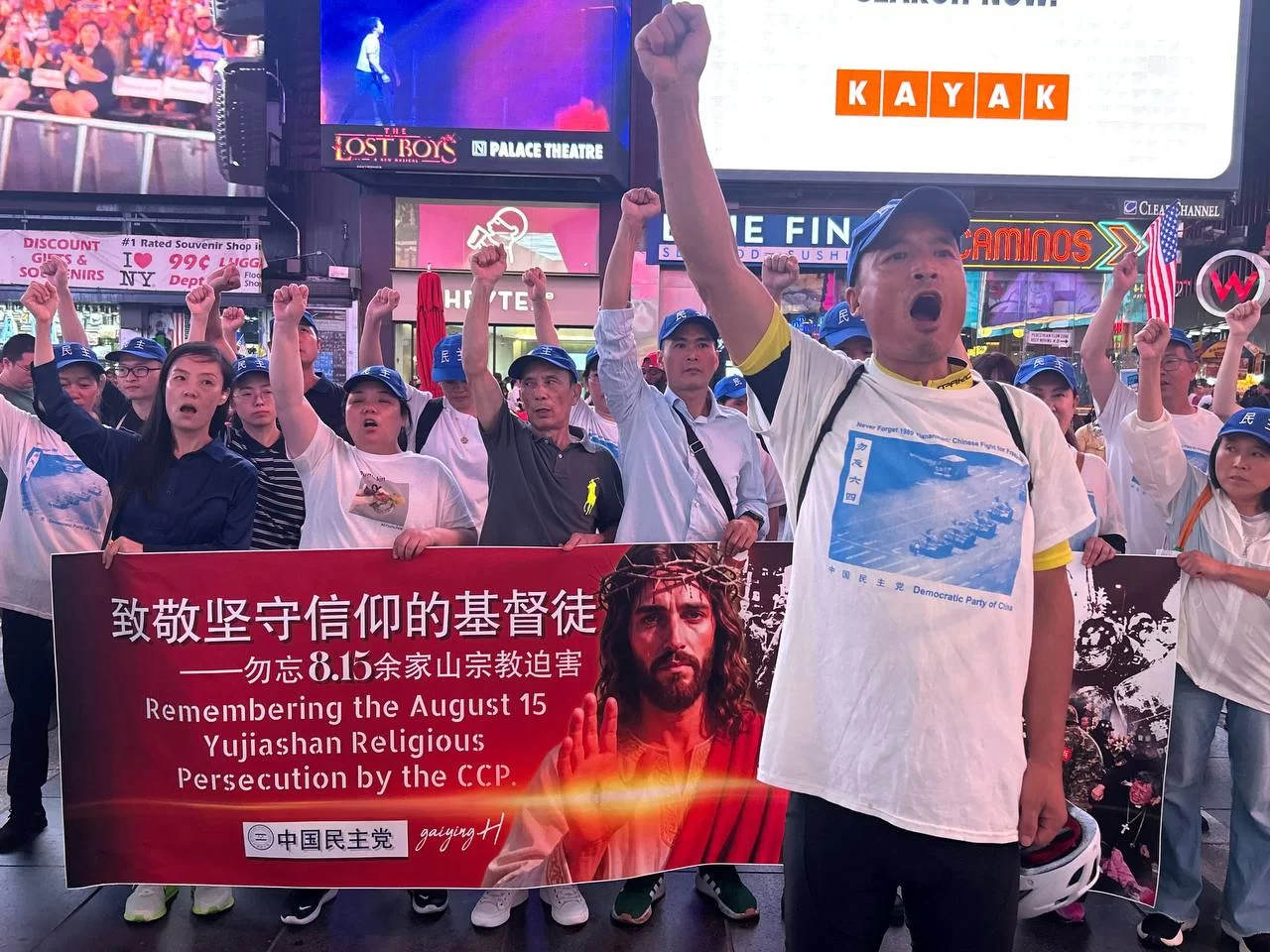
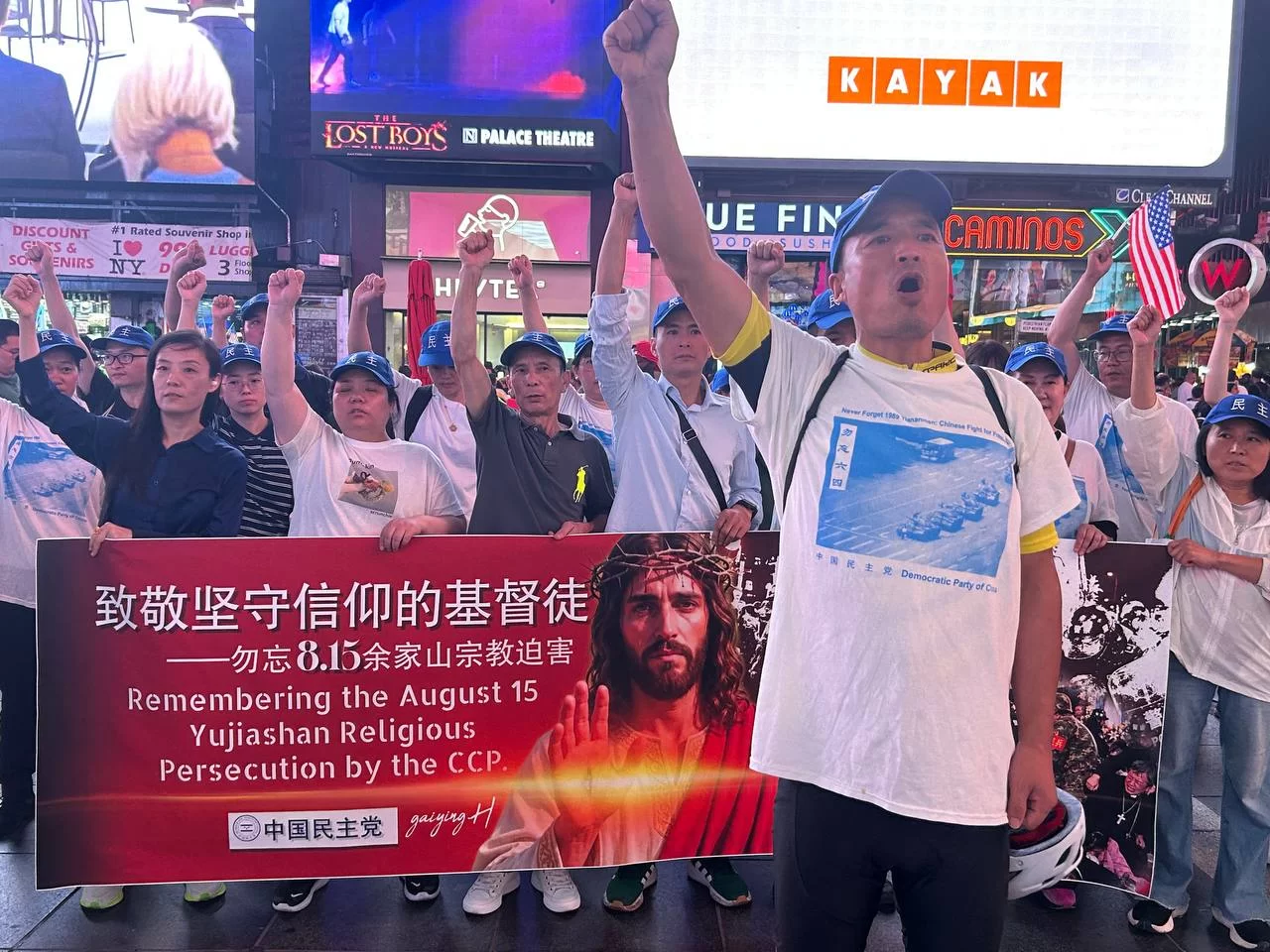
In August 1997, underground Catholics in the Linchuan and Chongren areas of Jiangxi once again faced strong obstruction from local authorities.
This history is now nearly thirty years old. Many young people may never have heard the name “Yujiashan,” but in the history of Jiangxi’s underground Catholic Church during the 1990s, Yujiashan was once an extremely important site for religious gatherings.
There was no magnificent church there, yet thousands upon thousands of believers gathered to pray and attend Mass on important feast days. For this very reason, Yujiashan gradually became a symbol of the religious freedom situation faced by underground Catholics in China.
I. August 1997: Arrests Around the Feast of the Assumption
According to materials released by Amnesty International in 1998, large-scale arrests targeting underground Catholics took place in the Linchuan area of Jiangxi Province and Chongren County in 1997.
Amnesty International recorded that more than 200 Catholics were arrested across Jiangxi Province during 1997, with one wave occurring in August and another from mid-November through the end of December. The August action took place around the Feast of the Assumption (August 15).
During the August action, 17 Catholics were arrested.
Those arrested included Father Deng Ruolun, the first apostolic administrator of the Yujiang Diocese, six nuns, and several lay believers. Contemporary materials from Human Rights Watch likewise recorded that between August 13 and 20, security authorities arrested 17 Catholics and blocked roads leading to the traditional Mass site.
Therefore, if we are to describe the 1997 events rigorously, rather than simply saying that “a conflict occurred on August 15,” it would be more accurate to say:
Around the Feast of the Assumption in August 1997, the authorities took action to prevent underground Catholics from going to Yujiashan to conduct religious activities and arrested 17 people, including priests, nuns, and lay believers.
This wording is more consistent with the available historical records.
II. The Yujiashan Incident Did Not Happen Suddenly
To understand the events of 1997, we must return to 1994 and 1995.
Yujiashan had long been an important religious site for underground Catholics in Jiangxi. Amnesty International recorded that from August 12 to 15, 1994, the local government mobilized the People’s Armed Police, joint-defense personnel, militia, and other forces to prevent approximately 10,000 believers from going to Yujiashan to celebrate the Feast of the Assumption.
Arrests and beatings occurred at the time. Amnesty International recorded that more than ten people were arrested, while more than 100 fellow Catholics were beaten, some of them suffering serious injuries.
By Easter 1995, the situation had escalated further.
Human Rights Watch recorded that approximately 20,000 believers attended the Easter Mass at Yujiashan. Afterwards, 30 to 40 people were detained, and four local Catholics were later sentenced to between two and five years in prison. At least two women were reportedly beaten so severely that they needed assistance eating after their release.
This is also why we cannot simply apply the figures from 1995 directly to 1997.
The large-scale arrests, sentencing, and severe beatings in 1995 are supported by substantial contemporary human rights reports; in 1997, a different group of 17 Catholics was arrested.
The two were consecutive events, but they were not the same incident.
III. Why Was Yujiashan So Important?
The heart of the matter is actually quite simple:
Where did believers want to worship?
At the time, some underground Catholics in Jiangxi refused to join the officially controlled religious system, insisted on maintaining religious ties with the Holy See, and held Masses in private homes, in the countryside, and at locations such as Yujiashan.
Human Rights Watch’s 1997 report China: State Control of Religion explicitly stated that the Chinese government sought to restrict the operating space of the underground Catholic Church and used large-scale operations, raids, fines, and other measures. The report also recorded that in November 1996, at least 80—and possibly as many as 120—underground Catholics near Linchuan were detained.
This shows that the Yujiashan incident was not simply a “road dispute,” but part of the long-standing conflict between China’s religious management system and the underground Church at that time.
IV. The 17 People Arrested in 1997 Should Not Be Merely a Number
The materials released by Amnesty International preserve some of the names of those arrested, including:
- Father Deng Ruolun;
- 6 nuns;
- lay believers such as Zhang Jiehong and Zhang Jiyu;
- and fellow Catholics such as Liu Haicheng and Zhou Xiaoling.
The significance of this list is that it reminds us:
The “17 people” in history were not an abstract number, but 17 real human beings.
They had their own families, faith, and lives, and they also bore the risks brought by their choices.
Amnesty International also stated at the time that some of the detained Catholics were reportedly subjected to torture or abuse. Since such information came mainly from human rights investigations and Church channels at the time, historical writing should use careful formulations such as “reportedly” and “Amnesty International recorded,” rather than presenting every detail that has not been confirmed by an independent judicial investigation as an established fact.
V. This Was Not an Isolated Incident
The series of events that took place around Yujiashan from 1994 to 1997 reveals a clear timeline:
- 1994——The authorities prevented large numbers of underground Catholics from going to Yujiashan to celebrate the Feast of the Assumption, and arrests and beatings occurred.
- 1995——Approximately 20,000 believers attended the Easter Mass, followed by large-scale arrests; some believers were sentenced to between two and five years in prison.
- 1996——Underground Catholics near Linchuan continued to face mass detentions, as the authorities further tightened control over underground religious activities.
- August 1997——Around the Feast of the Assumption, 17 underground Catholics were arrested and roads were blocked to prevent believers from going to the traditional religious gathering site.
- November to December 1997——Another wave of arrests targeting Catholics took place in Jiangxi. Amnesty International stated that more than 200 Catholics were arrested across Jiangxi during 1997.
Therefore, Yujiashan was not an isolated historical event, but a microcosm of the long-running conflict between China’s underground Catholic Church and government religious controls during the 1990s.
VI. Why Should We Still Remember Yujiashan Today?
Because religious freedom has never been merely an abstract political concept.
Ultimately, it comes down to a very simple question:
Can a person pray according to their faith?
Can a priest celebrate Mass?
Can a nun maintain her religious life?
Can an ordinary believer worship God together with other believers?
If even these most basic acts entail the risk of arrest, fines, imprisonment, or even abuse, then we cannot simply treat these events as ordinary public-security cases.
Of course, as we look back on this history today, we should also reject exaggerations and unverified rumors.
History with genuine power does not need fabrication.
The arrests and beatings of 1994, the large-scale detentions and sentencing of 1995, the 17 people arrested in 1997, and the contemporary records left by Amnesty International and Human Rights Watch are, in themselves, sufficient to explain the situation.
The true value of history is that it allows those who came later to know:
There were people who paid a price for holding firmly to their faith;
There were people who, under pressure, still refused to abandon their consciences;
And there was a group of ordinary people who, in order to worship God according to their faith, made their way to Yujiashan.
Thirty years have passed, and many names have gradually been forgotten by the world.
But for those who experienced all this,
faith was not a slogan, and conscience was not something that could be ordered to shut down.
May we remember them.
May history not be forgotten.
And may the China of the future allow every person, regardless of their religious faith, to worship and pray freely under the protection of the law, and to live according to their conscience.