This English version may have been machine-generated from the Chinese original and may not convey the original meaning accurately.
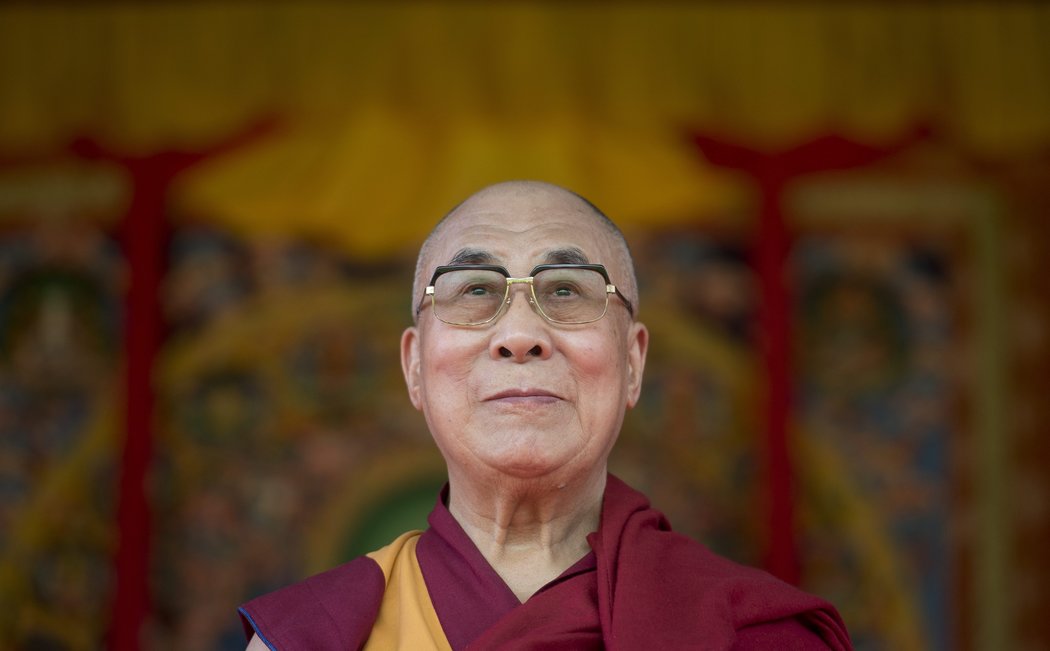
The U.S.-China Economic and Security Review Commission, a body of the U.S. Congress, has recommended that the United States explicitly recognize the successor chosen through a religious process authorized by the 14th Dalai Lama. The report places the succession issue within the geopolitical rivalry among the United States, China, and India. While this naturally reflects international strategic considerations, the core of the dispute is not, first and foremost, a contest among great powers, but a basic question: Should the leader of a religious community be recognized by that community’s own traditions and followers, or determined by state power through administrative decree?
According to the material, Beijing maintains that the Dalai Lama’s reincarnation must undergo “domestic searches, selection by the Golden Urn, and approval by the central government.” This means that the ultimate validity of the religious succession process is not determined by the religious community but conferred by a state apparatus led by a single party. The issue is not whether a particular religious ritual has historical justification, but rather this: When a government can decide who is the “legitimate” religious leader, religious freedom is no longer an inviolable right of citizens, but a privilege that those in power can approve, revoke, and redefine.
This is precisely the common pathology of one-party dictatorship: Power lacks democratic authorization and effective checks and balances; executive authority can reach into religion, education, the media, and even individuals’ inner lives. The judiciary is not independent, and citizens lack institutional channels to correct abuses of power through free elections, independent courts, and press oversight. Whether the subject is the successor to Tibetan Buddhism or ordinary people’s freedoms of belief, expression, and association, rights cannot receive stable protection as long as final decision-making power is concentrated in a political organization that cannot be challenged or held accountable.
Of course, the fact that the United States and other countries are incorporating this issue into their geopolitical strategies also serves as a reminder that the Tibet issue cannot be reduced to great-power competition. External support, if it fails to respect the wishes of local communities, may likewise instrumentalize the religious community. The principle that should truly be upheld is that Tibetans and relevant religious communities have the right to decide their own religious affairs and to express their views in an environment free from coercion.
Resolving conflicts of this kind cannot depend on who possesses the more powerful propaganda machine or administrative force. It must rely on constitutional democracy, the separation of powers, judicial independence, and effective guarantees of freedom of religion, speech, and association. Citizens are not subjects of state power, and faith is not a resource that governments may possess. Only when power is constrained by law and individual dignity is placed above political commands can similar succession disputes return from a struggle for power to faith and rights themselves.
News Background: The original report on which this commentary is based can be found at News - Voice of America.