
This English version may have been machine-generated from the Chinese original and may not convey the original meaning accurately.
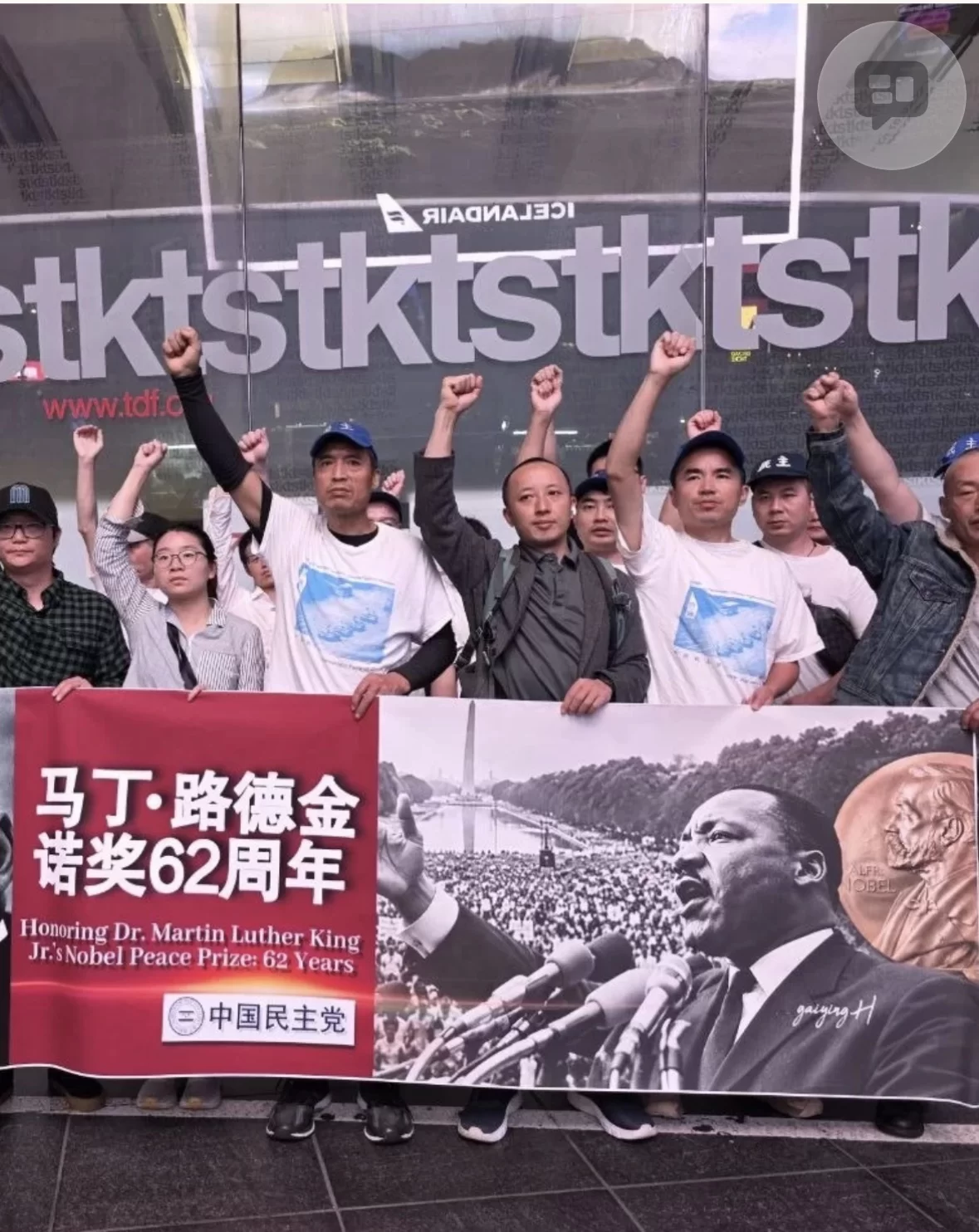
Why Do We Resist Evil Yet Still Need to Learn Forgiveness?
——From Martin Luther King Jr.’s Nonviolent Resistance to the Christian Examination of the Soul
When we face dictatorship, tyranny, and the darkness of human nature, what should we choose?
Should we fight violence with violence, or dissolve hatred through love?
Should we forgive those who do evil, or stand up to seek justice for the victims?
If forgiveness means giving up resistance, are we then condoning evil? If resistance eventually turns into hatred, and even overthrows violence through violence, how can we avoid becoming the very people we once opposed?
This is a profound question that has troubled human history, political philosophy, and the Christian faith. It is also an examination of the soul that no person with a conscience can easily evade.
一、Martin Luther King Jr.: Nonviolence Is Not Submission, but Resistance with Dignity
Martin Luther King Jr. was a Christian and a great leader of the American civil rights movement.
He faced a society marked by severe racial discrimination. In that era, Black Americans suffered unjust treatment in public life, education, employment, political participation, and other areas.
In the face of systemic oppression, he did not choose to respond to violence with violent revenge. Instead, through peaceful marches, boycotts, speeches, civil disobedience, and social mobilization, he awakened the conscience of the public and promoted social change.
He paid a heavy price for this, enduring threats, arrests, and violent attacks before ultimately being assassinated in 1968.
But his struggle was not in vain.
The passage of the Civil Rights Act of 1964 and the Voting Rights Act of 1965 became important achievements of the American civil rights movement.
What Martin Luther King Jr. left us is not merely a chapter of history, but also a spirit worthy of deep reflection.
Nonviolence does not mean refusing to resist; forgiveness does not mean refusing to hold people accountable; loving one’s enemies does not mean allowing them to continue harming the innocent!
He did not demand that Black people endure racial discrimination forever simply because he was a Christian.
On the contrary, he transformed Christianity’s convictions about love and justice into action to change society in the real world.
He showed us that true courage does not necessarily manifest itself in the weapon one holds; it can also manifest itself as a conscience that refuses to submit in the face of power.
True strength does not necessarily mean destroying one’s opponent. It can mean exposing injustice, changing institutions, and restoring dignity to those who were once oppressed.
二、Why Can Violent Revolutions Overthrow Old Tyrants Yet Create New Ones?
Looking back at human history, we discover a heartbreaking phenomenon:
Some people have seized power under the banner of liberating the people and achieving equality, promising to establish an ideal society without oppression or exploitation, where everyone would be equal.
Yet once they truly gained power without constraint, they began suppressing dissent, controlling thought, depriving people of freedom, and even raising the executioner’s blade against those who had once supported them.
Why does this happen?
Because overthrowing a ruler does not mean changing the logic by which power operates.
If, after a revolution, the army, police, judiciary, and public opinion remain monopolized by the same organization; if the people still cannot freely express their views, supervise the government, or replace those in power through peaceful and fair elections, then the most dangerous aspects of the old system may be preserved.
The old rulers fall, but the new rulers inherit the power of the old system.
Some revolutions in history ultimately failed to achieve the freedom and equality they initially promised and instead established new forms of authoritarian rule.
This is not to say that all revolutions are doomed to fail. Rather, it reminds us that we cannot judge solely by the ideals and slogans of revolutionaries and assume that they will necessarily treat the people well once they come to power.
Even more alarming is that when an organization claims to possess the only correct truth, represent the sole direction of historical development, and even embody the interests of the entire people, it may regard differing opinions as hostile, oversight as betrayal, and resistance as a crime.
Thus, suppressing dissent is described as preserving stability, depriving people of freedom is described as realizing an ideal, and even harming the innocent is packaged as a necessary price of history.
When an ideal permits no questioning, and a power permits no oversight, even the most beautiful slogans may become tools for oppressing the people!
This is precisely the historical lesson we must seriously reflect upon.
What a society truly needs is not to place all its hopes in some wise and virtuous ruler, but to establish institutions capable of restraining power, protecting citizens, and correcting mistakes.
What we need is not leaders who will never make mistakes, but a system in which the people still have the rights and channels to correct those mistakes even when leaders do err.
The meaning of democracy is not to guarantee that those in power will always be kind, but to prevent anyone from using power to do whatever they please.
三、How Should Christians Understand Forgiveness in the Face of Evil?
This is the deepest and most agonizing part of the entire question.
In Matthew 5:44, the Lord Jesus teaches us:
Love your enemies and pray for those who persecute you.
But when we see dictators trampling human rights, believers suffering persecution because they remain faithful to their faith, and innocent people being deprived of their freedom, how can our hearts possibly remain unmoved?
If someone persecutes Christians, we should love that person.
If someone uses power to harm the innocent, we should still pray for that person.
Does that mean we cannot criticize them? Cannot hold them accountable? Cannot demand that they stop harming others?
Of course not!
We must distinguish between two important matters:
Forgiving a person does not mean approving of their actions; loving a person does not mean condoning their evil.
If someone is harming innocent people, we may hope that they will repent, but we cannot therefore give up protecting the victims.
If a government persecutes believers, we may pray for those in power, but we cannot abandon our voice for religious freedom simply because we are Christians.
If someone commits a crime, we may refuse to act out of a spirit of revenge while still demanding that the person face a fair trial.
Forgiveness does not call evil good; mercy does not absolve wrongdoers of all responsibility.
True forgiveness is refusing to let hatred control one’s soul.
True justice is refusing to allow the innocent to continue suffering harm they should never have had to bear.
The two are not contradictory.
Proverbs 31:8–9 teaches us to speak up for those who cannot speak for themselves, to judge justly, and to defend the rights of the poor and needy.
This reminds us that faith concerns not only the peace within our individual hearts, but also how we treat those who are suffering.
If we constantly speak of forgiveness while turning a blind eye to harm that is taking place, has that forgiveness already become a form of condoning evil?
This is a question that everyone who pursues justice should seriously consider.
四、Resisting Evil Requires Courage; Refusing to Be Consumed by Hatred Requires Courage as Well
I believe that a person with a conscience cannot remain unmoved forever in the face of injustice.
When we see the innocent suffer, we become angry.
When we see the powerful bully the weak, our hearts ache.
When we see people pay a heavy price for holding fast to their faith and pursuing freedom, we feel indignant.
These emotions do not mean that something is wrong with our faith.
What we must truly beware of is where our anger ultimately leads us.
Anger can become a driving force for pursuing justice, but it can also gradually turn into hatred.
We can stand up because of injustice, but we must not therefore believe that everyone whose position differs from ours deserves to be punished.
We can expose evil, but because we oppose a certain regime, we must not abandon our respect for facts.
We can demand that wrongdoers be held accountable, but we must not therefore assume that any means of harming them is justified.
We can hate evil with all our being, but we must not let hatred replace conscience; we can stand firm for justice, but we must not therefore abandon basic respect for human beings!
The Lord Jesus commands us to love our enemies not because evil is unimportant, but because we must not allow evil to determine the kind of people we ultimately become.
This path is difficult.
At times, we may not be able to do it.
But faith does not require us to pretend that we have no pain or anger. Rather, it enables us, amid these emotions, to continue seeking God’s guidance.
五、We Must Not Place Our Hope in the Goodness of Rulers, but Should Establish Institutions That Restrain Power
Of course, we hope that those in power will have faith, conscience, and a sense of responsibility.
We hope they will respect the dignity of the people, protect the vulnerable, listen to differing opinions, and be willing to correct their mistakes.
But a trustworthy government cannot rely solely on the personal character of those in power.
People make mistakes, power tempts people, and even the kindest person may be influenced by interests and desires.
Therefore, a society that truly respects its people needs an independent judiciary, fair elections, freedom of the press, freedom of speech, freedom of religion, and effective oversight of government power.
The purpose of these institutions is not to assume that everyone in power is a bad person, but to acknowledge that anyone can make mistakes and that all power must be restrained.
From a Christian perspective, this also reminds us that human beings are limited. No secular organization can acquire unconstrained power merely by claiming to possess the truth.
We can hope that those in power will have a conscience, but we must not entrust the people’s freedom to the assumption that those in power will always have one!
Therefore, in the face of dictatorship and injustice, we need not place all our hopes in the possibility that those in power will suddenly have a change of heart one day.
Through peaceful resistance, civic participation, public discussion, legal procedures, and institutional reform, we can work step by step toward change.
Martin Luther King Jr.’s experience tells us that nonviolent resistance is not a magic formula guaranteeing victory.
It requires courage, organization, and perseverance, and it may come at a heavy cost.
But it reminds us that resisting oppression need not come at the price of reproducing the oppressor’s methods.
We must ask not only how to overthrow an unjust system, but also how to build a society that will no longer so easily create victims.
That is the goal worth pursuing over the long term.
六、What Answer Does Jesus on the Cross Give Us?
Dear brothers and sisters, ultimately we must return to the gospel.
When the Lord Jesus was arrested, humiliated, and nailed to the cross, he did not use violence to take revenge on those who harmed him.
But this does not mean that he never exposed injustice.
Jesus once sternly rebuked hypocrites and publicly pointed out the hypocrisy of religious leaders.
He did not call wrong right simply to appease those in power.
He showed mercy and called people to repentance; he taught love and exposed sin.
The cross shows us the depth of forgiveness, while also reminding us that sin and suffering are real.
Christian faith does not require us to abandon the distinction between good and evil. Rather, it requires us, after discerning good from evil, still not to place ourselves in God’s position.
We can judge whether actions are good or evil, and we can demand that wrongdoers accept responsibility, without declaring that a person’s soul is forever beyond the possibility of repentance.
Final judgment belongs to God.
Our responsibility in this world is to uphold the truth as far as possible, protect the vulnerable, pursue justice, and refuse to repay evil with evil.
Romans 12:21 says:
Do not be overcome by evil, but overcome evil with good.
I believe this verse is at the heart of what we are discussing today.
Overcoming evil with good does not mean remaining indifferent to evil.
When someone uses lies to maintain power, we uphold the facts.
When someone uses fear to control the people, we defend freedom.
When someone persecutes believers, we speak out for religious freedom.
When someone harms the innocent, we do our best to protect the victims.
What we oppose is not merely a particular evil person, but also the power structures that allow evil people to harm others without restraint.
What we seek is not merely to make evil people pay a price, but also to protect victims and prevent society from continually producing new ones.
True justice means holding wrongdoers accountable, protecting victims, and ensuring that people in the future will not have to endure the same suffering.
And true mercy means that, in the pursuit of justice, we still refuse to abandon respect for human nature or hope for repentance.
七、We May Not Be Able to Change the Whole World, but We Can Refuse to Let Darkness Change Us
As I write these words, I want to return to the lives of ordinary people.
What can we do in the face of social injustice?
We can uphold the truth and refuse to whitewash evil.
We can speak out courageously and refuse to abandon our conscience because of fear.
We can choose peaceful and lawful means to promote social progress.
We can help those who have been harmed and speak up for those who are unable to speak for themselves.
We can pray for those who persecute others without ceasing to demand that they stop persecuting them.
We can also practice honesty, justice, mercy, and love in our own families, churches, and communities.
Do not underestimate these seemingly ordinary things.
Change in the world occurs not only on the political stage, but also in the moment when one person is willing to help another.
I believe that a person can be angry without being controlled by anger; can resist without becoming the very person they once opposed; and can pursue justice without abandoning mercy.
We do not need to become the God who judges the world, but we can become people who uphold the truth, protect the vulnerable, and practice justice.
We do not need to decide on God’s behalf who will ultimately receive mercy, but today we can do our part to lessen the pain of the wounded, give the oppressed a little more hope, and help those around us experience a little more of Christ’s love.
This path will not be easy, and it may not always yield the results we hope for.
But we can choose not to give up the light because of darkness, not to abandon our conscience because of injustice, and not to lose our ability to love because of hatred.
This is not weakness.
This is the power of faith and the dignity of humanity.
⸻
Conclusion: Justice Must Not Be Abandoned, Forgiveness Must Not Be Feigned, and Our Original Convictions Must Not Be Lost
Returning to the question with which we began:
How should we respond to dictatorship and injustice?
I think the answer is not to choose between resistance and forgiveness.
We can resist injustice while refusing to hate.
We can forgive those who hurt us while insisting that they be held accountable.
We can pray for our enemies while protecting the victims.
We can pursue social change while refusing to let violence become the new logic of rule.
We can stand by our convictions while acknowledging our own limitations and remaining humble.
Forgiveness is not surrender to evil, and resistance is not surrender to hatred; pursuing justice is about ensuring that more people will no longer be harmed.
Dear brothers and sisters, we cannot guarantee that evil will never again exist in this world, nor can we guarantee that every struggle for justice will achieve victory immediately.
But we can decide what kind of people we want to become.
When we oppose dictatorship, it is because we respect human dignity.
When we pursue democracy, it is because we hope people can live freely.
When we oppose religious persecution, it is because we believe that human conscience should not be trampled arbitrarily by power.
When we pursue justice, it is because we do not want to see innocent people continue to suffer.
Therefore, no matter how long the road may be, we should strive to guard our original convictions.
May we have Martin Luther King Jr.’s courage to face injustice, as well as the forgiveness and mercy taught by Christ.
May we hate evil with all our being without losing compassion; stand firm for the truth without becoming self-righteous; and speak out courageously without forgetting humility.
May we neither submit to evil nor allow hatred to steal our souls.
For we pursue justice not to create new hatred; we learn forgiveness not to allow evil to continue unchecked.
May justice be upheld, may freedom no longer be trampled upon, may those who suffer receive comfort, and may the oppressed regain their dignity.
May those in power learn humility, may wrongdoers be willing to repent, and may every person be able to live in freedom, peace, and dignity.
May the Lord grant us wisdom, so that we may know when to remain silent and when we must speak out; when we should forgive and when we must stand up to protect the innocent.
May we not lose the light in darkness, not lose hope in suffering, and on the road to pursuing justice, always guard the original convictions Christ has given us.
Justice must not be abandoned, forgiveness must not be feigned, conscience must not be sold, and our original convictions must not be lost!
May all glory be to our Lord Jesus Christ!
Hallelujah! Amen! 🙏