This English version may have been machine-generated from the Chinese original and may not convey the original meaning accurately.
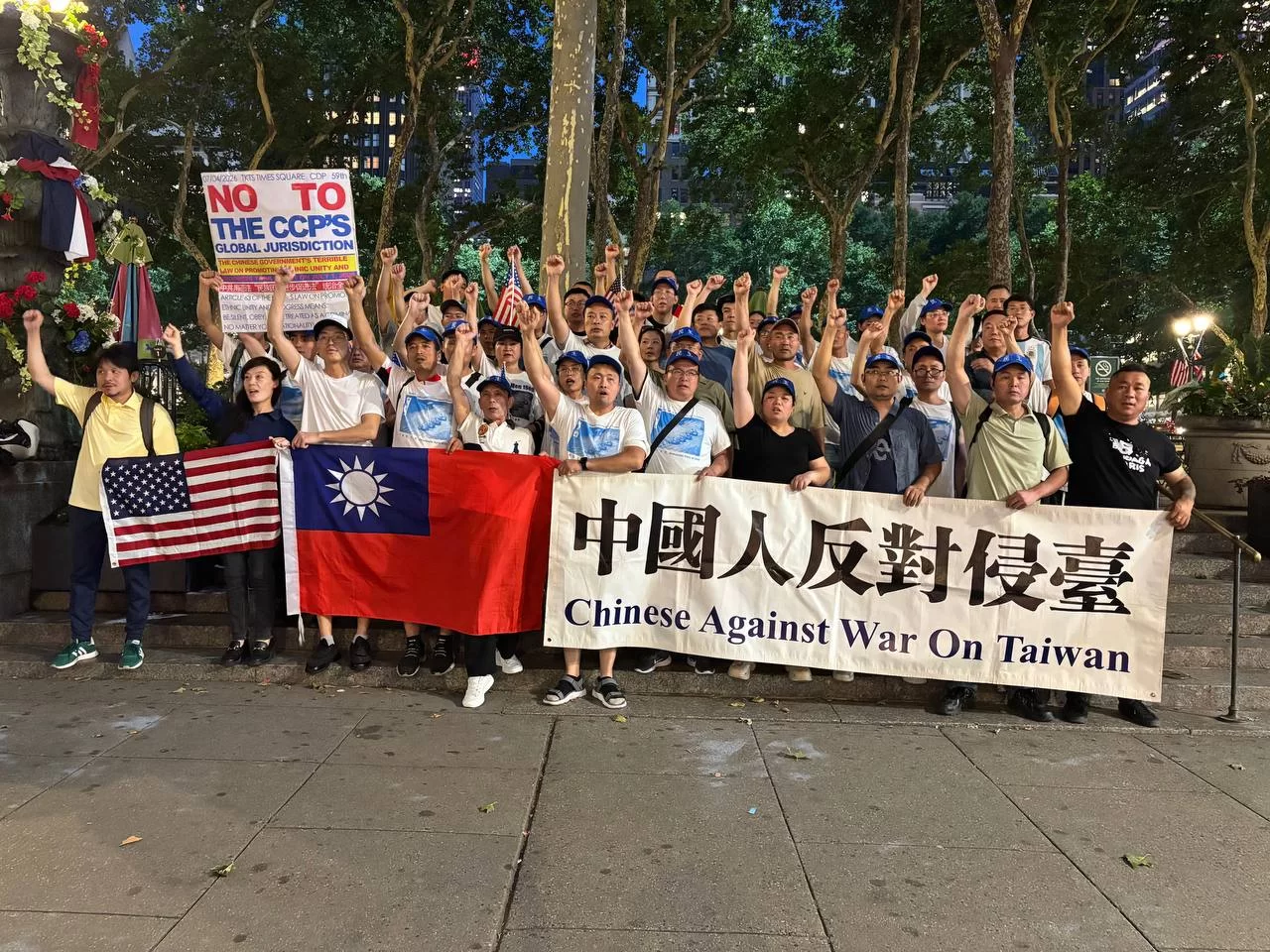
According to reports, commentators have pointed out that the true intent of the Law on Promoting Ethnic Unity and Progress is not simply to advocate “unity,” but rather to extend Beijing’s ideological jurisdiction beyond its national borders—as any speech or conduct deemed “separatist” or “damaging ethnic unity,” regardless of whether it occurs inside or outside the country, may be brought within the scope of regulation under this legal framework. This claim deserves our serious consideration: What gives a ruling party the absolute power to define “unity” and “separatism,” and to determine who is an “enemy” and who is a “comrade”?
In any constitutional democratic country, ethnic relations and tensions between different groups certainly exist, but they are addressed through negotiation and checks and balances involving an independent judiciary, a free media, pluralistic political competition, and open debate—not through unilateral legislation, unilateral interpretation, and unilateral enforcement by the ruling party. When legislative, executive, judicial, and propaganda powers are all concentrated in the hands of a single power center, the word “unity” is no longer the product of social consensus, but becomes a tool for suppressing dissent and tightening control. Who is labeled as “undermining unity” and who is regarded as a “threat to national security”—the ultimate power of interpretation remains solely in the hands of those in power. Ordinary citizens, minority groups, and people overseas may all be labeled without any access to judicial remedy.
What is even more alarming is that the “extraterritorial effect” claimed by this type of legislation is, in essence, the projection of an authoritarian governance logic from within a country onto the global public sphere—an attempt to make overseas Chinese, minority activists, and critics censor themselves and fear speaking out publicly. This exposes the fragility of the system itself: a government that truly possesses a popular mandate and institutional confidence does not need to rely on expansive legislation to suppress the voices of its critics; only a one-party dictatorship that lacks electoral authorization and fears genuine expressions of public opinion needs to continually tighten the legal net and expand its jurisdiction, turning “unity” into a talisman for excluding dissent and consolidating power.
History has repeatedly shown that “unity” maintained through coercion is fragile unity, and “stability” maintained through fear is false stability. Genuine ethnic harmony and social cohesion can only be built on the equal protection of citizens’ rights, an independent judiciary capable of providing remedies for vulnerable groups, and freedom of the press and speech that allows conflicts to be openly discussed and resolved. The separation of powers and judicial independence are not Western “luxuries,” but institutional safeguards necessary for any multiethnic, pluralistic society to prevent those in power from defining and punishing people arbitrarily.
For every citizen concerned about China’s future, this law once again reminds us: when a regime can arbitrarily redraw the boundary between “loyalty” and “betrayal” and attempts to extend that boundary into every corner of our lives, only by promoting an institutional framework of constitutional democracy, checks and balances, and an independent judiciary can we restore “unity” to its proper meaning—a community based on free will, rather than obedience based on fear.
News Background: The original report on which this commentary is based can be found at Deutsche Welle: DW-WORLD.DE。