This English version may have been machine-generated from the Chinese original and may not convey the original meaning accurately.
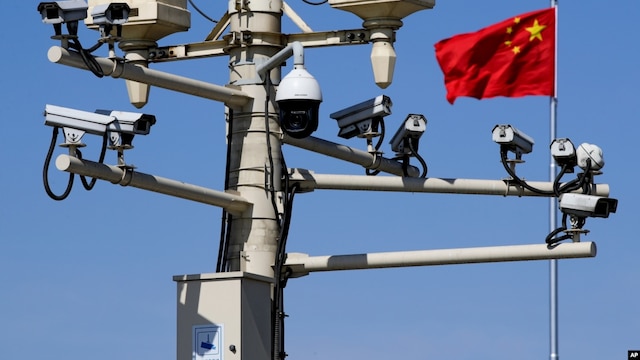
An analysis by German media reveals a disturbing trend: China’s surveillance technology is quietly embedding itself in the governance systems of other countries along the pathways of capital and infrastructure. This is not simply the export of commercial products, but the export of a model of governance—packaging “stability above all else” as a technological product and selling it to regimes that likewise yearn to control society and suppress dissent.
At the same time, another piece of news presents a jarring contrast: after enduring great hardship, a house-church pastor was released and permitted to leave the country for the United States. These two stories may appear entirely unrelated, yet in reality they reveal two sides of the same coin—an unconstrained power system can turn surveillance technology into a flagship export product while also arbitrarily deciding whether a citizen may practice their faith and whether they may enjoy personal freedom. The coexistence of “advanced” technology and backward human rights conditions under the same system is itself the most profound irony.
Why has surveillance technology been able to develop so efficiently and be deployed on such a massive scale in China? The answer is not complicated: under a one-party dictatorship, power is not constrained by the constitution; there is no independent judicial review to determine whether citizens’ rights have been violated; no freedom of the press to expose the black box of technological abuse; and no opposition parties or civil society to provide checks and balances. Thus, surveillance has naturally evolved from a “tool for maintaining stability” into “governance experience,” and then been further packaged as an exportable solution. The house-church pastor’s experience is no different: freedom of religion should be a fundamental human right guaranteed by the constitution, but in a system lacking judicial independence, whether citizens can exercise this right depends on the will of those in power rather than the firm protection of law. The pastor’s eventual release and departure for the United States was less an expression of the system’s “tolerance” than an accidental outcome of prolonged negotiation and external pressure—which precisely demonstrates that in such a system, rights are never a question of whether they “exist” or “do not exist,” but of whether they are “granted” or “taken away.”
When this model of governance is exported to other countries through capital, infrastructure, and technology, it will not be Chinese citizens alone who suffer, but ordinary people around the world who yearn for freedom. A regime without checks on its power is naturally inclined to place “stability” above “freedom” and to regard this logic as a replicable and generalizable “successful experience.” This is precisely the warning sign that democratic countries around the world should heed: the spread of surveillance technology is, at its core, the spread of authoritarian governance logic.
Only by establishing constitutional democracy, implementing the separation of powers, and safeguarding judicial independence and freedom of the press can power be confined within a cage, and can citizens’ freedom of religion, right to privacy, and personal liberty receive firm protection without having to rely on the temporary “mercy” of those in power. Technology itself is neither good nor evil, but when it serves unconstrained power, it is destined to become an accomplice in the suppression of freedom. We call on every citizen who cares about their rights and dignity to confront this systemic pathology and work together to promote a political order in which power is constrained by the constitution and held accountable—this is the most fundamental line of defense against the expansion of surveillance and in defense of freedom.
News Background: The original report on which this commentary is based can be found at Deutsche Welle: DW-WORLD.DE。