
This English version may have been machine-generated from the Chinese original and may not convey the original meaning accurately.
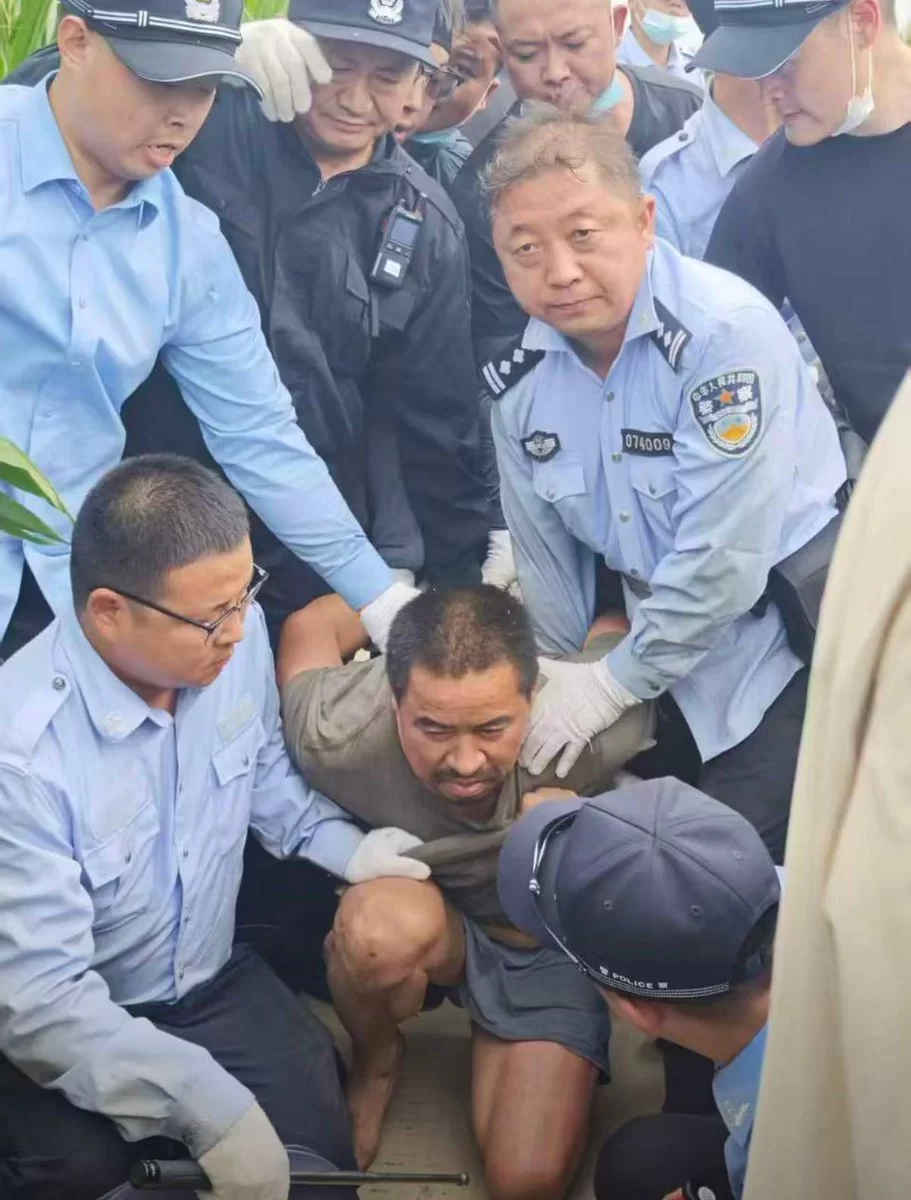
When a bloody case is reduced to just two words: "trivial matters"
Sometimes what's most worth noting in an official announcement is not what it says, but what it deliberately doesn't tell you.
According to public information, a knife attack occurred in Xiping County, Zhumadian, Henan. A man was reportedly stabbed and killed by a neighbor over so-called "trivial matters," and during his escape, several other people were injured. Police then launched a large-scale manhunt and eventually apprehended him in a cornfield.
The official statement was brief, just a few lines.
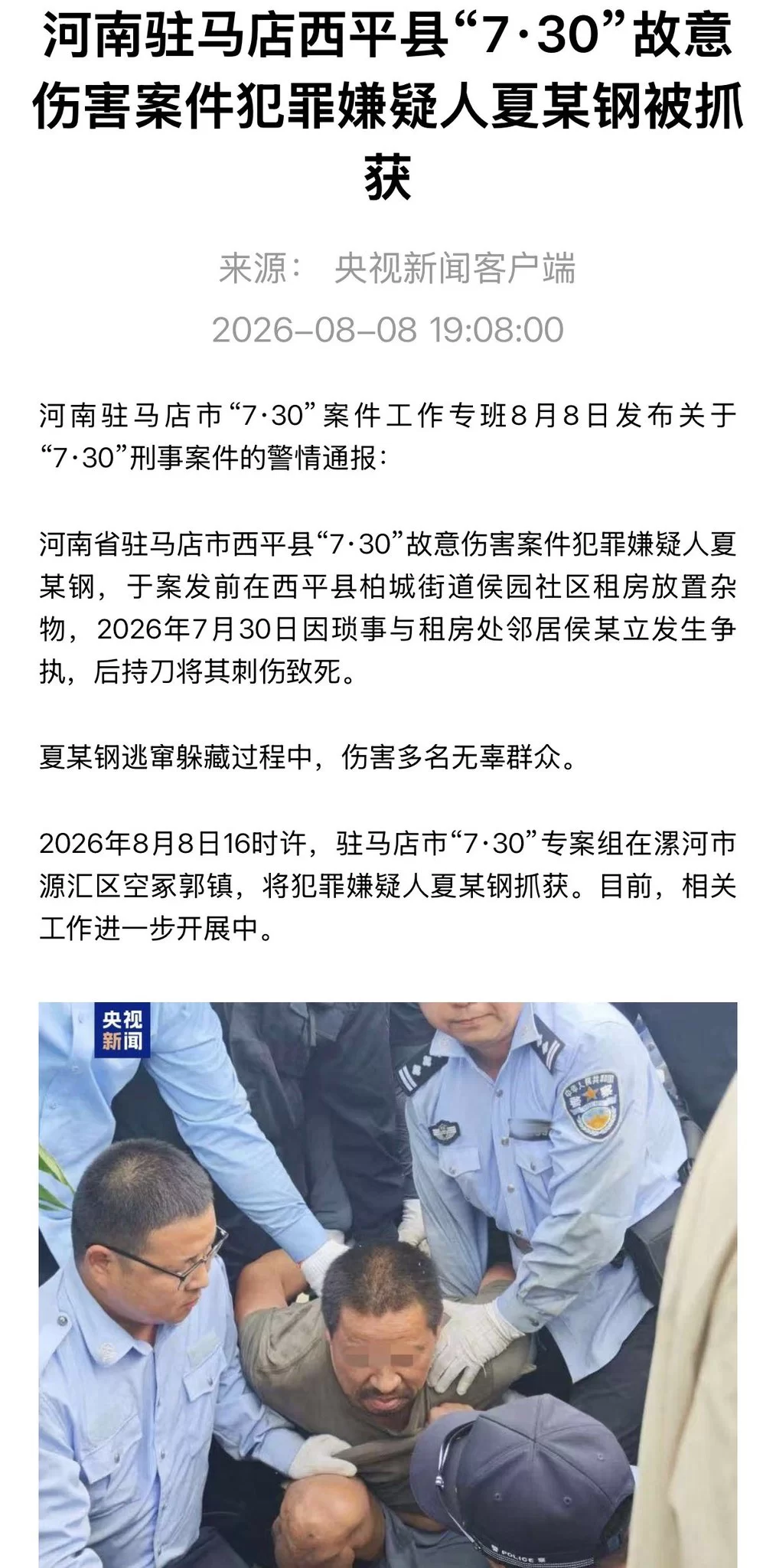
With the phrase "due to trivial matters," a person's death, multiple injuries, and the entire complex social background of the incident were all compressed into just a few words.
But we can't help but ask:
What exactly were these "trivial matters"?
Why did it escalate to a fatal stabbing?
How many people were actually injured?
What is the specific condition of the injured?
Why was the suspect able to hide in the local area for so long?
Did local residents notice anything unusual beforehand?
Were there long-accumulated conflicts before the incident occurred?
None of these questions have been adequately addressed.
This is the most familiar pattern in certain official narratives:
Simplifying complex issues, individualizing serious social conflicts, and ultimately condensing an incident that deserves broader social reflection into a single phrase—"triggered by trivial matters."
And then, the matter is considered closed.
One person is labeled a "murderer."
The police are responsible for the arrest.
The media is responsible for reporting it.
The public is responsible for watching.
As for why it happened, where the conflict originated, and whether there were mechanisms that could have prevented the tragedy—it seems no one needs to keep asking.
This is precisely what should alarm us most.
⸻
What's truly terrifying isn't just a fugitive
Of course, a knife attack is a crime. The victim deserves sympathy, and the perpetrator must bear legal responsibility.
But a normal society cannot be satisfied with simply "catching the murderer" and calling it done.
Because catching one murderer only solves the problem of one individual.
If similar social conflicts keep occurring, then what we truly need to address is the environment that generates conflict, allows it to accumulate, and fails to resolve it through normal means.
When disputes arise between ordinary people, if there is no fair, transparent, trustworthy channel to resolve them;
When the weak face injustice and feel they have nowhere to appeal;
When trust between people continues to erode;
When the pressures of life, economic hardship, and social insecurity keep piling up;
Eventually, some conflicts may escalate from verbal disputes to physical altercations, from physical altercations to violence, and even into irreversible tragedy.
And once tragedy strikes, it becomes far too easy to attribute everything to one person's "impulsiveness," "personality," or "trivial matters."
Because that's the easiest way out.
No need to question the system.
No need to question governance.
No need to question social conflict.
And certainly no need to ask why ordinary people are growing increasingly desperate.
⸻
Who benefits most from "the underclass harming each other"?
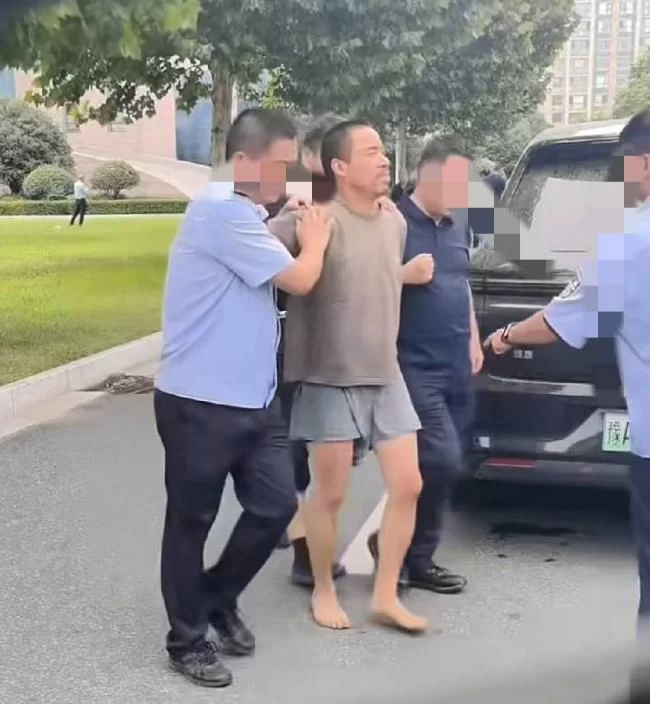
Online, some have jokingly called Xia Fugang the "King of Xiping," and there have even been extreme, sarcastic remarks about "building him a temple and offering incense for ten thousand generations."
If such remarks truly exist, they should be understood as an expression of online sentiment and dark humor, not as praise for violent crime.
The fact that a murder case could be mocked—even turned into a "coronation"—by some people is, in itself, absurd enough.
Why does this kind of sentiment emerge?
Because when people have long felt unfairly treated with no effective way to seek resolution, their anger sometimes finds expression through the most distorted and absurd means.
This is not a phenomenon to be celebrated.
On the contrary, it is a dangerous social signal.
When ordinary people begin to hate and attack one another, the questions that truly deserve scrutiny may end up being hidden behind the scenes.
This is what's called "the underclass harming each other."
If a society pushes all its conflicts down onto ordinary people, letting them wear each other down and turn against one another, the surface may appear calm—but the underlying conflicts have not disappeared.
⸻
True stability has never meant silence
A healthy society should not fear public questioning.
A truly confident government should not fear telling the public the truth.
When something happens, the facts should be made clear;
When someone is injured, the public should know;
When something occurs, it should be thoroughly investigated;
Where there are loopholes, they should be openly corrected.
Transparency does not create chaos.
On the contrary, transparency is the most fundamental condition for building trust.
True stability is not about silencing everyone.
True stability means ordinary people can believe that:
Even when conflicts arise, there are places to reason things out;
Even when harmed, someone will protect them;
Even when facing power, they can seek legal recourse;
Even as an ordinary person, they possess basic dignity and safety.
Otherwise, so-called "stability" is nothing more than pressing all conflicts into silence.
And anger that is suppressed does not simply vanish.
It merely waits for its next eruption.
So what we should truly focus on is not just:
"Why did this person commit murder?"
But rather:
"Why does this society increasingly need tragedies to remind us of the problems it harbors within itself?"
What a civilized society must ultimately eliminate is not merely individual criminals.
It must also strive to eliminate the soil that drives ordinary people to despair, allows conflicts to keep worsening, and lets tragedies repeat themselves again and again.
May we strive for a society where no one needs to use their fists to prove their dignity.
May the law truly protect the weak, rather than leaving them to hurt only each other.
May the truth never again have to hide in a cornfield.