
This English version may have been machine-generated from the Chinese original and may not convey the original meaning accurately.
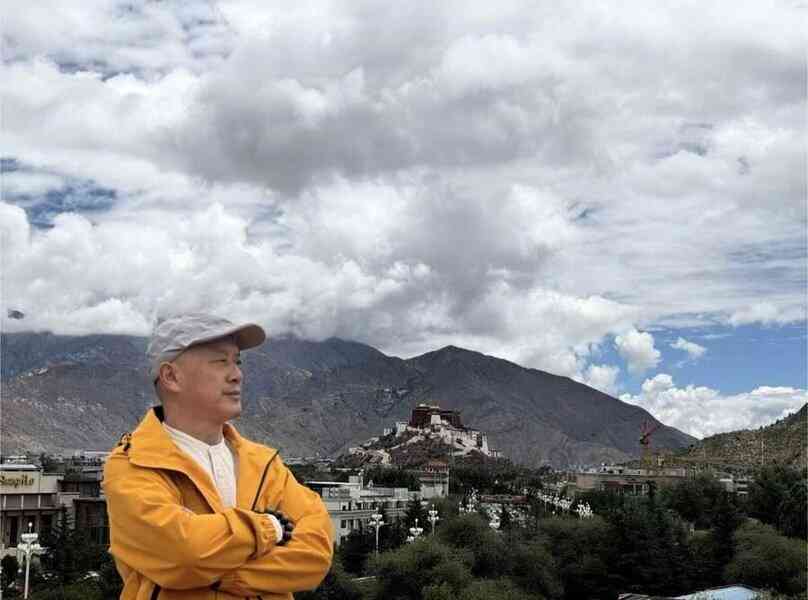
A photo on a mobile phone album, a kind gesture of lending a cushion — in the end, it became a criminal case of "inciting separatism." Zhang Yi's ordeal may seem absurd, but it precisely reflects the logic by which this system operates: in a country with no clear boundaries and no independent judicial review, any expression can be arbitrarily labeled by those in power as "threatening national security."
According to reports, Zhang Yi merely wanted to help a Tibetan woman who did not speak the same language understand that he meant no harm, and showed her a photo of the Dalai Lama. There was no political conversation between the two, no organized propaganda, no substantive element of incitement whatsoever. Yet the highly elastic charge of "inciting separatism" was enough to have a tourist criminally detained and approved for arrest over a single photo, facing a prison sentence of five years or more. This is not rule of law — it is the use of criminal law in the name of governing dissent and belief.
What deserves further scrutiny is: who defines the boundaries of "separatism"? In a country without multi-party competition, without freedom of the press, and with a judicial system subordinate to the party-state apparatus, this defining power rests entirely in the hands of law enforcement and prosecutorial organs — which themselves answer to the same center of power. Citizens cannot seek redress through independent courts, cannot hold law enforcement accountable through a free press, and certainly cannot hold decision-makers accountable through the ballot box. The Zhang Yi case is not the overreaction of an individual law enforcement officer; it is the inevitable product of institutional power unchecked by any constraint.
Even more alarming is that this incident occurred on the very first day the "Law on the Promotion of Ethnic Unity and Progress" took effect. According to Amnesty International, the essence of this law is not to protect cultural diversity, but to require that the culture and beliefs of ethnic minorities submit to a unified standard set by the state. Zhang Yi's photo incident has, precisely, become the first footnote to the implementation of this logic of "integration" governance — Tibetans cannot openly discuss the Dalai Lama, tourists cannot display related images, and religion and historical memory themselves are politicized as evidence of "separatism."
Zhang Yi is not an unfamiliar name. More than thirty years ago, he was imprisoned for participating in the 1989 student movement, a price that cost him permanent hearing loss. Thirty-some years later, he is still suffering imprisonment for the sake of ordinary people's freedom of expression. This intergenerational continuity precisely demonstrates that the problem has never been resolved institutionally — it has merely been replayed under a different charge, in a different place.
As long as the judicial system cannot be independent of party-state power, and as long as legislative and law enforcement powers remain concentrated within the same logical system, similar "catch-all crimes" will persist, and can be applied at any moment to any well-intentioned gesture or any careless word. Only when there is a genuine separation of powers, an independent judiciary, and constitutionally guaranteed freedom of the press and speech can citizens be free from losing their personal liberty over a photo or a sentence. The Zhang Yi case reminds us: defending another person's freedom to display their faith is also defending each of our own future rights not to be arbitrarily criminalized.
News background: The original report on which this commentary is based can be found at Radio Free Asia Mandarin.