This English version may have been machine-generated from the Chinese original and may not convey the original meaning accurately.
What Direction Is China Heading In?
China is rapidly moving toward an increasingly closed and authoritarian social structure.
The worship of totalitarianism, information censorship, internet surveillance, ideological indoctrination, suppression of dissent, and the increasingly intrusive control of power over every area of society—these are no longer merely some distant “trend,” but are becoming reality.
The media speaks with one voice, allowing only “correct stories” to be told within prescribed limits;
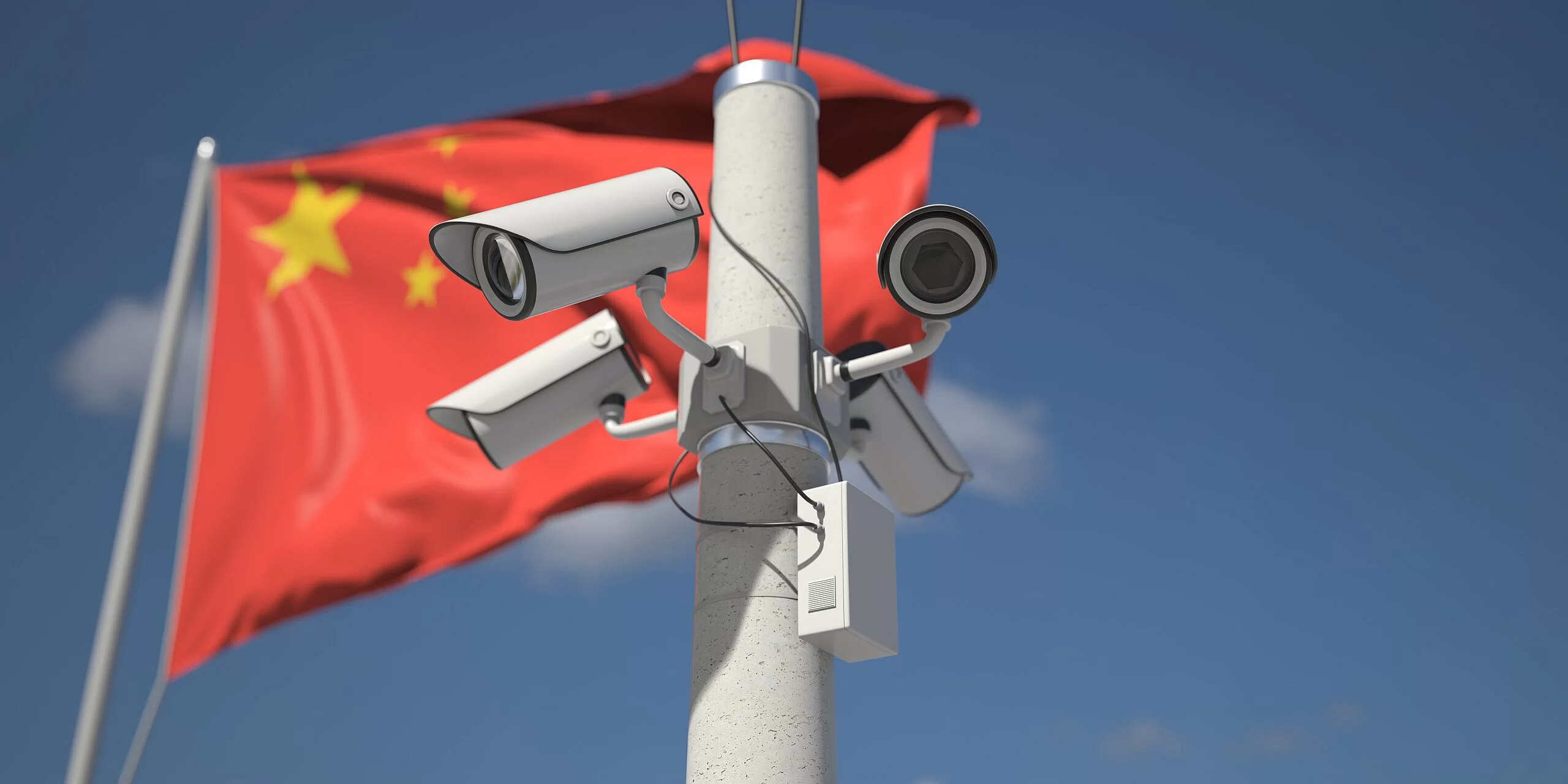
The internet is under comprehensive surveillance, and certain statements may even move from cyberspace into real-world legal punishment;
The leader’s image is constantly being reinforced, while personal power is highly centralized;
Education increasingly emphasizes political loyalty and ideology;
The space for civil society continues to shrink, making it increasingly difficult for independent voices to survive.
These are not things I have imagined out of thin air.
Freedom House’s latest report on China points out that the Chinese Communist Party maintains a high degree of control over state institutions, the media, online speech, religion, universities, businesses, and civil society, and finds that Xi Jinping’s concentration of personal power in recent years has reached a level rarely seen in decades.
The 2025 Freedom on the Net report also points out that China remains one of the world’s most repressive environments for internet freedom, while its censorship and internet-control systems continue to be strengthened.
Human Rights Watch likewise points out that the Chinese government controls the main channels of information and continues to strengthen its censorship and surveillance systems; pressure on government critics, journalists, human rights activists, and independent civil society remains in place.
Will China Become North Korea?
So what I am increasingly worried about is not:
“Will China become North Korea?”
What truly deserves vigilance is this:
China is beginning to display characteristics increasingly similar to North Korea’s closed political system.
Of course, there are still enormous differences between China and North Korea today.
China has a huge economic scale, a complete industrial system, global trade networks, modern cities, and a highly developed technology industry. Chinese society is also nowhere near as completely closed off as North Korea.
But that is precisely where the problem lies.
If a country with a population of more than one billion, a massive economy, powerful industrial capabilities, and advanced technological capacity continually uses these modern capabilities to strengthen information control, social surveillance, and political obedience, then the power it creates is something North Korea could never match.
A country with immense global economic and technological capabilities that continually tightens the space for internal freedom will produce a very particular kind of danger:
It may not be an impoverished North Korea, but a highly closed country with modern industry, modern technology, and global influence.
Why Are the People Silent?
What deserves even more consideration is this:
Why are the people silent?
Because of fear.
Why are intellectuals leaving?
Because they see no space in which they can express themselves freely.
Why is capital becoming increasingly cautious?
Because economic activity is also finding it increasingly difficult to remain fully separate from the political environment.
Why does the world hesitate?
Because China is too large and too important; any genuine confrontation could bring enormous economic and geopolitical costs.
So the truly frightening thing has never been a country’s poverty, but rather:
A country that possesses immense wealth and technological capabilities while continually closing off the free space of society.
That is what I am truly worried about.
A Modernized Closed Society?
If this direction continues to develop, then what China faces will be more than merely “regression.”
It may instead be:
A modernized, technologically advanced, economically massive closed society taking shape.
A country with the scale of the world’s second-largest economy, while also possessing highly centralized political power and modern technological capabilities, if it ultimately moves toward complete closure, will have an impact on the Chinese people, neighboring countries, and even the entire world far greater than that of a small closed country.
So the question we should truly be asking today is not:
“Has China already become North Korea?”
But rather:
“What direction is China actually heading in?”
The truly frightening part of history is not a disaster that occurs suddenly.
It is that many people have already seen the direction before the disaster takes shape, yet no one is willing to acknowledge it.
That is what deserves the greatest vigilance.