This English version may have been machine-generated from the Chinese original and may not convey the original meaning accurately.
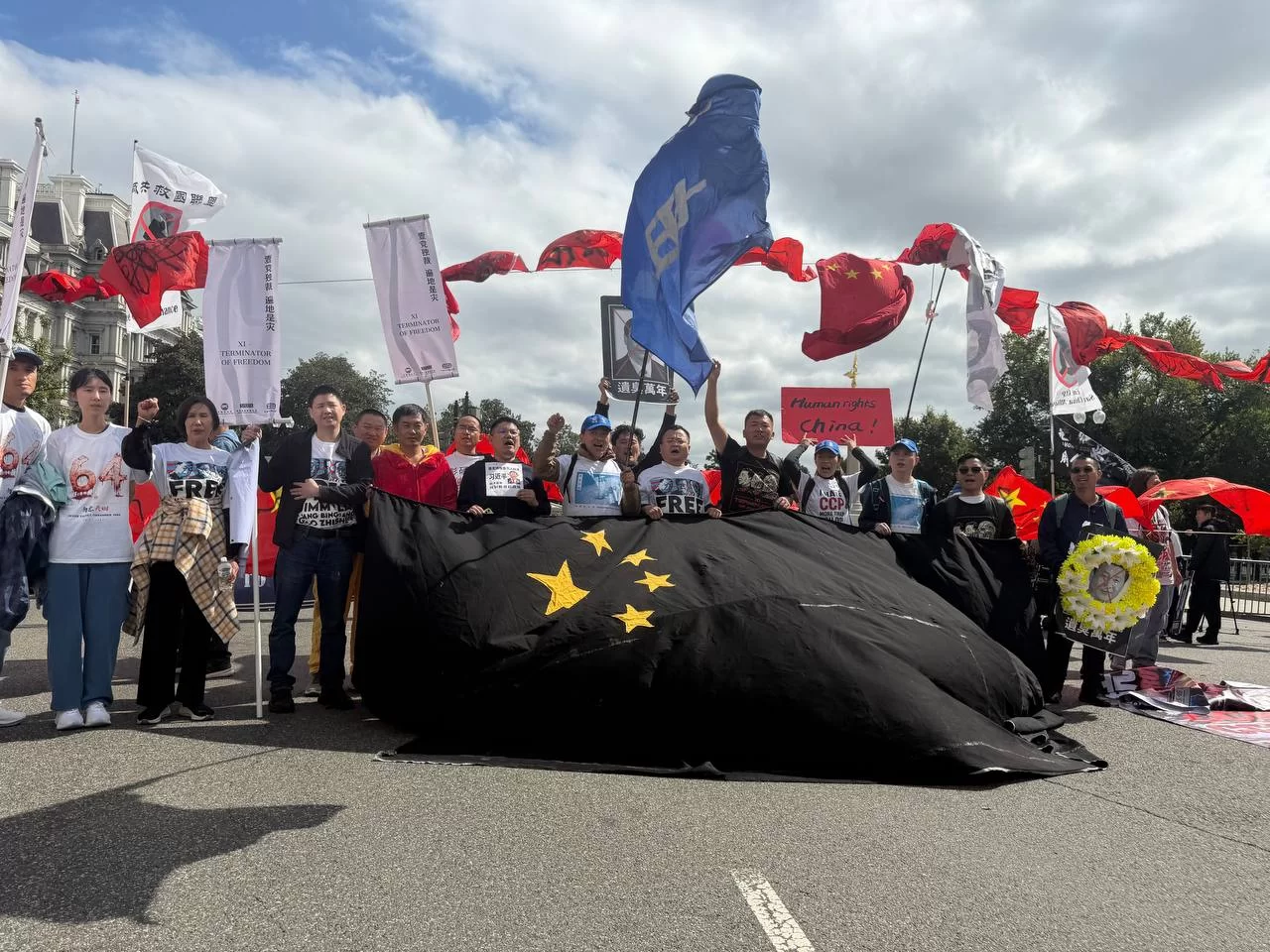
On September 24, Xi Jinping met with Trump at the White House; outside the White House, however, there was not just one voice claiming to “represent China.”
Overseas Tibetans, Uyghurs, Hong Kongers, Chinese democracy activists, and Taiwan supporters protested near the White House and around the Chinese Embassy in the United States. Tibetan groups unfurled the Tibetan snow lion flag, while the contingent associated with Wang Dan continued chanting; meanwhile, crowds supporting Xi waved Chinese and American flags and cheered near the motorcade route.
The value of these juxtaposed images lies in more than the fact that “there were protests on the streets of Washington.”
They concretely demonstrate a right often obscured by diplomatic rhetoric: A person does not temporarily lose the right to express a political position simply because heads of state are meeting.
Supporters may welcome, and opponents may protest; Tibetans may speak about religion and culture, democracy activists may speak about democracy, and Taiwan supporters may express their views on Taiwan’s autonomous choice.
As long as these expressions do not cross the boundaries of violence, threats, or coercion, state power has no reason to lump them all together as “troublemaking.”
The boundaries of rights must be clear, and so must the boundaries of what may be sacrificed in their name.
Freedom of assembly does not mean that one may harm others, nor does freedom of speech mean that one may use violence to prevent others from speaking.
But the material shows different groups expressing their demands in different locations, as well as supporters waving flags and cheering near the motorcade route; the reports provided no facts indicating violence or coercion.
If that is the case, these demands cannot be excluded from public discussion simply because they touch on Tibet, Xinjiang, Hong Kong, Taiwan, Chinese democracy, or human rights.
It is particularly worth noting that China’s ambassador to the United States, Xie Feng, identified Taiwan, democracy, and human rights as the so-called “red lines” of the Chinese side before the meeting.
Diplomatic negotiations can of course prioritize issues, but they should not turn words a national government does not want to hear into words citizens are forbidden to say.
The Taiwan issue concerns the political choices of Taiwan’s people; Tibetan demands concern cultural and religious life; and democracy and human rights concern whether every person can express themselves publicly, organize, move freely, and retain their own identity and judgment.
These are not bargaining chips that can be casually exchanged at the negotiating table.
For Chinese people living overseas, neither a passport nor a place of birth should become a discount on their rights.
When a Chinese democracy activist speaks in Washington, or a Tibetan displays a flag in public, they are first and foremost specific individuals exercising their freedoms of expression and assembly—not “troublesome variables” in a diplomatic relationship.
By the same token, people who support Xi Jinping also have the freedom to welcome him.
The real test is not which side’s voice is more agreeable to the government, but whether both sides can appear without intimidation or arbitrary suppression by administrative power.
The meeting inside the White House may end, but the voices on the street remind us: Contact between states should not come at the cost of erasing individuals.
Diplomatic relations can be adjusted and security policies can be negotiated, but a person’s right to express a political position, uphold ethnic and human rights concerns, and participate in public assemblies cannot be silenced because a leader is visiting or because a government has announced “red lines.”
News background: The original report on which this commentary is based can be found at Radio Free Asia Mandarin.