
This English version may have been machine-generated from the Chinese original and may not convey the original meaning accurately.
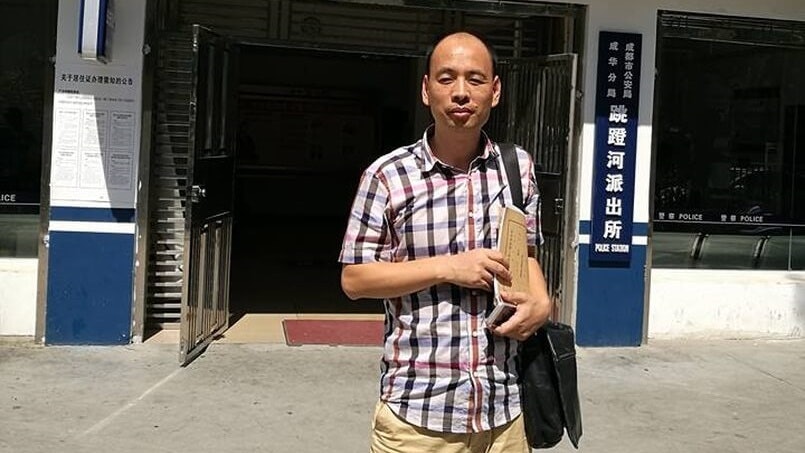
According to information from the Rights Defense Network Information Center, on September 29, 2026, Sichuan human rights lawyer Lu Siwei had a 10,000-yuan fine deducted from his bank account by the Chenghua District Court of Chengdu while continuing to appeal. The materials show that the money came from the fine imposed in an earlier criminal judgment. The available materials do not provide the specific date of the deduction, the enforcement notice, or the court’s response, and this site has been unable to independently verify the information.
What exactly was he convicted of?
According to the Rights Defense Network, Lu Siwei was previously convicted of “the crime of illegally crossing the national (border) boundary” and fined 10,000 yuan. After serving his sentence and being released, he continued to appeal, seeking to have the original judgment revoked and to be found not guilty.
“The crime of illegally crossing the national (border) boundary” is the charge involved in the judgment. The source did not provide the full judgment or list the details of the case, the evidence, or the court’s handling of the appeal. Therefore, the materials themselves cannot determine whether he committed a crime or whether the original judgment should be revoked.
How was this 10,000 yuan deducted?
The Rights Defense Network, citing a notice from Ms. Zhang, Lu Siwei’s wife, reported that the Chenghua District Court had recently compulsorily deducted 10,000 yuan from Lu Siwei’s bank card. The report described the money as enforcement of the fine imposed in the original judgment.
The amount on the books is clear: the judgment imposed a fine of 10,000 yuan, and the court deducted 10,000 yuan this time. The materials do not explain whether notice was issued before the deduction, whether the full amount was deducted from the account at once, or whether Lu Siwei raised any objection.
What have Lu Siwei and the court said?
According to reports, Lu Siwei believes that he was “wrongfully imprisoned” and that the case constituted “political persecution,” which is why he has continued to appeal. He also believes that the deduction is related to his recent reports and complaints against multiple officials in Sichuan and Chengdu, and constitutes retaliation for those reports and complaints.
The report said that the targets of his reports and complaints included Sichuan Governor Shi Xiaolin, Chengdu Mayor Chen Shuping, Chengdu Public Security Bureau Director Hu Guomin, and Chengdu Intermediate People’s Court President Yang Cheng, and alleged that these individuals were suspected of bending the law for personal gain and abusing their powers. These claims all came from Lu Siwei’s side and reports by the Rights Defense Network; this site has been unable to independently verify them.
The available materials contain no response from the court, the officials concerned, or any other official department. They also do not explain whether the court characterized the deduction as ordinary enforcement of a criminal fine or responded to Lu Siwei’s allegation of “retaliation.” The two accounts cannot currently substitute for one another: one side says this was compulsory enforcement of the fine imposed in the original judgment, while the other says it was retaliation for reporting and appealing.
Who paid what price?
The financial cost that can already be confirmed is 10,000 yuan, borne by Lu Siwei’s bank account. In addition, the costs listed in the materials include his continued appeals after release from prison, the legal pressure resulting from the original criminal judgment, and the increased living burden described by Lu Siwei’s side. These impacts have no specific monetary value and cannot be converted into a figure without authorization.
Several questions remain unanswered: What was the basis for enforcing the fine imposed in the original judgment? When did the court decide to make the deduction? Has the appeal been formally accepted or reviewed? Will the court respond to the allegations that “the case was decided incorrectly” and that the fine was “used as a means of retaliation”? For someone who has already served a prison sentence and continues to appeal, 10,000 yuan is not merely a number in an account. But whether it was the final step in enforcing the judgment or the beginning of another dispute will have to await the release of more public materials.
Source (This article was compiled from the following public information; points that could not be independently verified are noted in the text):