
This English version may have been machine-generated from the Chinese original and may not convey the original meaning accurately.
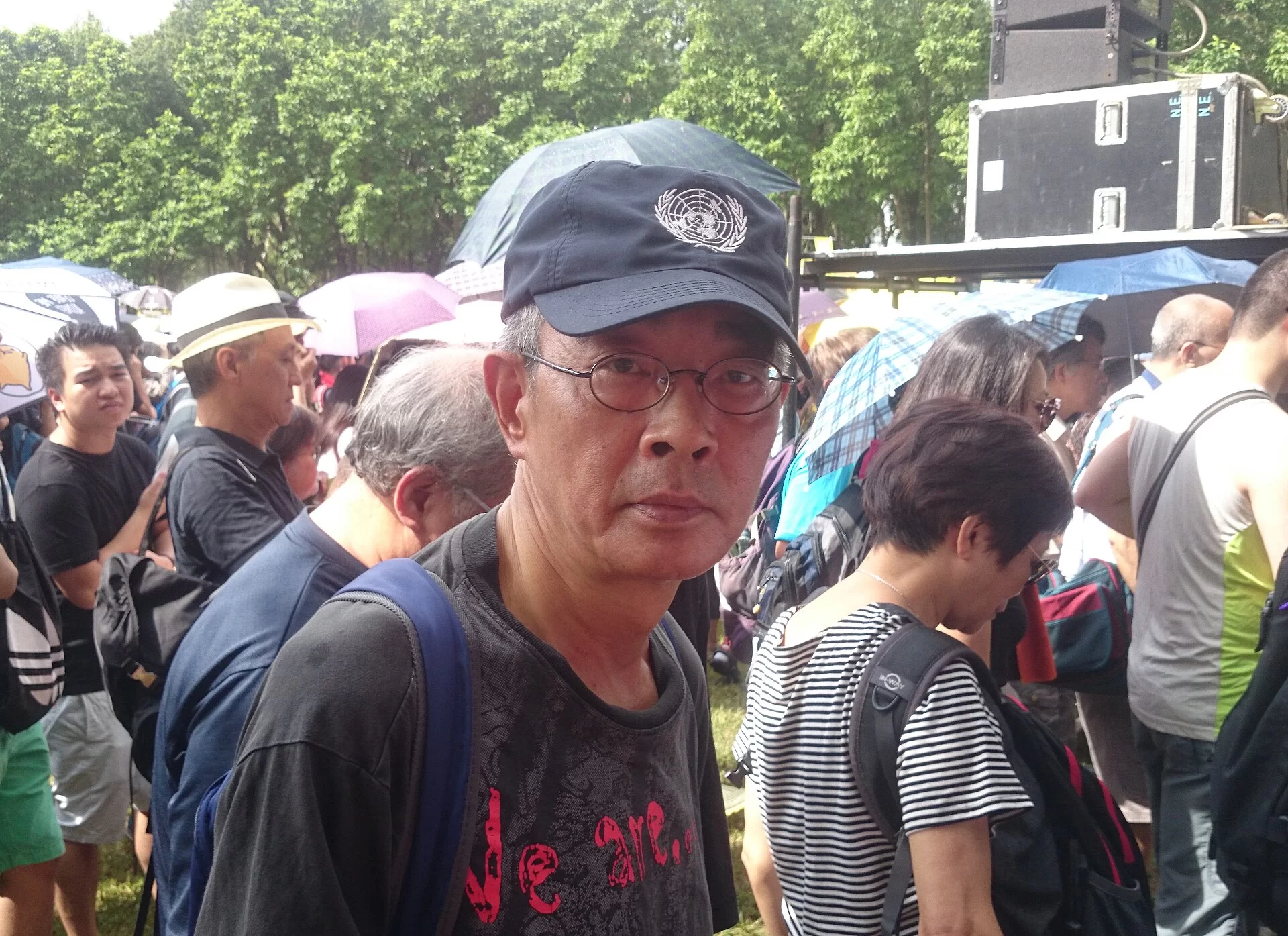
Lin Rongji, the manager of Causeway Bay Books, died of illness in Taipei at the age of seventy. The news has left many Hong Kong people in Taiwan and others who care about Hong Kong deeply saddened. This is not merely the passing of a bookseller, but yet another revelation of a wound from an era—the “Causeway Bay Books incident,” which shocked the world ten years ago, has still not truly come to an end.
Lin Rongji is remembered not because he did anything earth-shattering, but because he merely wanted to sell books quietly and lawfully, yet was subjected to cross-border detention, a prolonged disappearance, and forced “confession” simply for publishing and selling political books disliked by the authorities in Beijing. This is something that should never happen in a normal society governed by the rule of law: the publication and sale of books fall within the scope of freedom of speech and freedom of the press, and are basic rights of citizens in a modern civilized society. Yet under a one-party dictatorship, once the sensitive nerves of the power center are touched, legal procedures can be bypassed at will, personal freedom can be deprived across borders, and individual dignity can be completely crushed.
Lin Rongji later chose to step forward and expose the truth, publicly recounting his experiences of imprisonment, interrogation, and surveillance. The courage he displayed is precious precisely because, under a totalitarian system, telling the truth itself comes at a tremendous cost. He subsequently moved to Taiwan, leaving Hong Kong before the national security law was implemented—a detail that invites reflection: he voted with his feet, using the course of his own life to provide the most painful footnote to the fact that “one country, two systems” had become a mere name. The fact that Causeway Bay Books could be “reborn” in Taiwan was precisely because Taiwan had things he had never enjoyed in Hong Kong: judicial independence, press freedom, multiparty competition, and a democratic system in which power is constrained by the Constitution and the ballot box. The same bookstore, two different fates—what they reflect is the vast difference between two systems.
What deserves to be asked is this: Why would a normal bookseller become the target of a cross-border manhunt? The root cause lies not in the abuse of power by individual officials, but in an entire system lacking checks and balances—there is no judicial system independent of the Party to review the limits of public power, no free media to expose and supervise abuses, and no genuine elections to hold decision-makers accountable. Within such a structure, the rights of any citizen may be sacrificed at will in the name of “national security” or “political correctness,” whether that person is a bookseller, lawyer, journalist, or ordinary internet user.
Lin Rongji’s experience reminds us that the so-called “Causeway Bay Books incident” was never an isolated case, but an inevitable product of the operating logic of a one-party dictatorship—when power is unconstrained, individuals have nowhere to hide. Preventing similar tragedies from happening again depends not on the “enlightenment” or “benevolence” of individual rulers, but on institutional safeguards: constitutional democracy establishes the boundaries of power, the separation of powers creates effective checks and balances, judicial independence protects every ordinary person from arbitrary violations, and freedom of speech and of the press ensures that the truth cannot be concealed.
Lin Rongji is gone, but the questions he left behind remain unresolved: How many people’s freedom and dignity are still tied to a power that is subject to no restraint? Remembering him should not stop at mourning, but should be transformed into a sustained questioning of and struggle for constitutional governance, the rule of law, and civil rights—only then can we do justice to the freedom he spent the latter half of his life protecting.
草民就是一根野草,不论你是多么努力的活着,最终会被残暴的体制收割。共匪不除,百姓难安。