This English version may have been machine-generated from the Chinese original and may not convey the original meaning accurately.
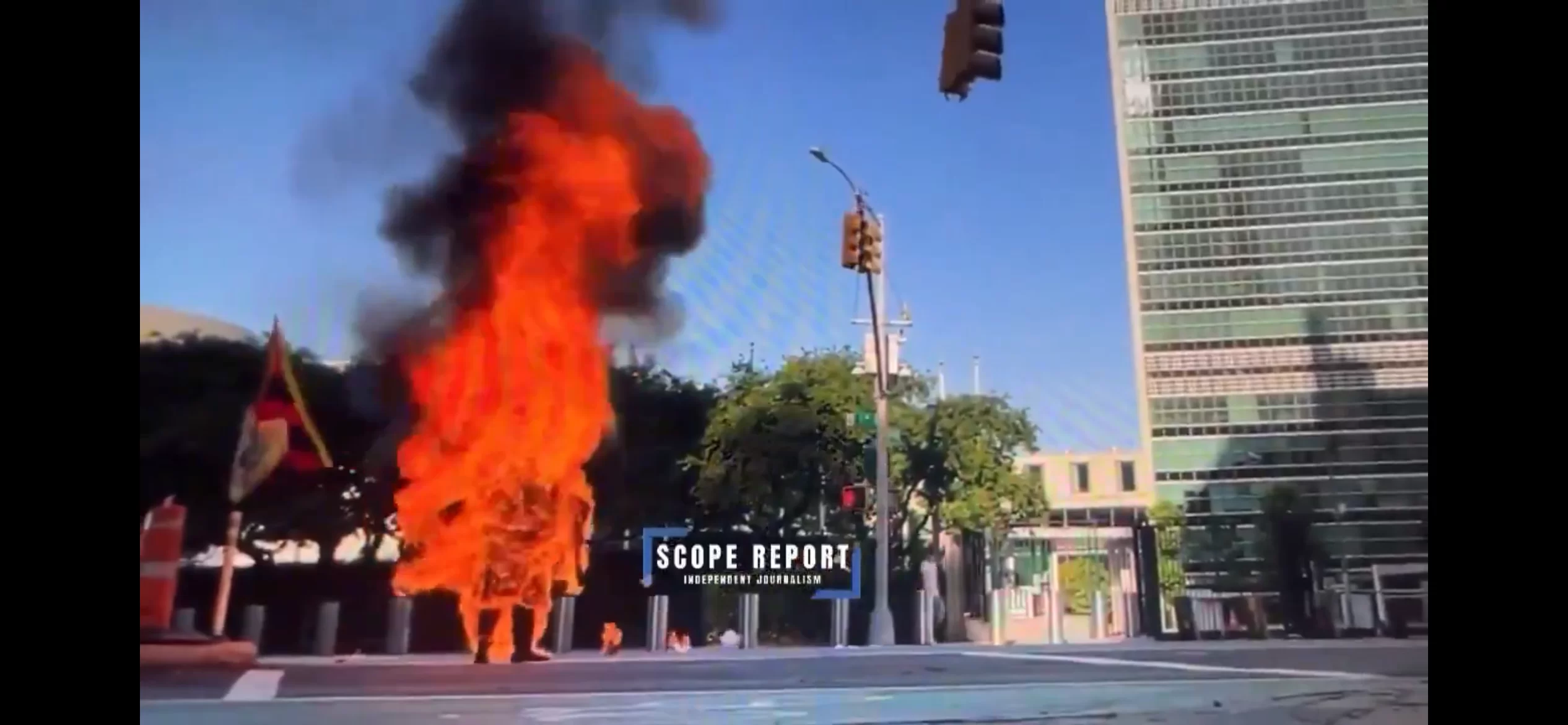
In front of the United Nations headquarters in New York, a Tibetan ended his life by self-immolation. According to reports, the deceased, Lhoga Rangtsan, condemned the Chinese Communist Party’s occupation of Tibet and deprivation of Tibetans’ human rights in his final statement, and called on Tibetans to unite in resistance. This is not an isolated incident—as documented by the International Tibet Support Movement, which advocates for Tibetan rights, 159 cases of self-immolation by Tibetans have occurred since 2009, resulting in the deaths of more than 100 people. An entire people has sent the world an appeal for help again and again in the most tragic and desperate way, while the world’s response is often little more than a candlelight vigil.
Even more alarming is the fact that this tragedy occurred one day after China’s Ethnic Unity Promotion Law officially took effect. The law not only advances an assimilation policy within China, but also attempts to extend its reach abroad, claiming that individuals and organizations overseas that “undermine ethnic unity” will be “held legally accountable.” In other words, Beijing wants not only ideological conformity at home, but also to suppress criticism and dissent regarding its ethnic policies around the world. This is a classic totalitarian logic: packaging domestic repression as “law,” then exporting that repression to the free world through “long-arm jurisdiction.” The U.S. State Department has explicitly pointed out that the law requires overseas entities to “actively advance the Chinese Communist Party’s ethnic unity agenda,” or face retaliation—this is no longer an internal affair, but an infringement on the sovereignty of other countries and the freedoms of their citizens.
Why do Tibetans resort to the extreme form of protest of self-immolation? The answer is not complicated: under the Chinese Communist Party’s one-party dictatorship, Tibetans have no genuine channels for political expression, no independent judiciary to uphold their rights, no freedom of the press to ensure that their voices are truthfully recorded, and no democratic elections through which they can determine the fate of their own people. When every normal avenue of appeal is blocked, and the assimilation of language, religion, and culture is written into law and imposed by the machinery of the state, an individual’s body becomes the last remaining tool of protest. This is not merely a Tibetan tragedy; it is the disgrace of the entire authoritarian system.
The Chinese Foreign Ministry dismisses criticism from the international community as “malicious smears of China’s ethnic policies.” We are familiar with this rhetoric: every voice that exposes the truth is labeled “smearing” or “separatism.” But facts speak louder than denials: a form of “unity” that must be imposed through “legal accountability” is precisely proof of how false and fragile that unity is. Genuine ethnic unity has never been forced through intimidation and assimilation; it is built on equal civil rights, local autonomy, freedom of religious belief, and political participation.
The cry that Lhoga Rangtsan sent out with his life should not be met with nothing more than a candlelight vigil. It should make everyone who cares about freedom understand that as long as the power structure of one-party rule remains unchanged, as long as the judiciary cannot be independent of the Party’s will, and as long as there are no genuine democratic elections or checks and balances on power, tragedies like this will not end. Constitutional democracy, the separation of powers, judicial independence, and the protection of fundamental human rights have never been empty slogans; they are the last line of defense against driving an entire people into despair.
News background: The original report on which this commentary is based can be found at Tibet - Voice of America.