This English version may have been machine-generated from the Chinese original and may not convey the original meaning accurately.
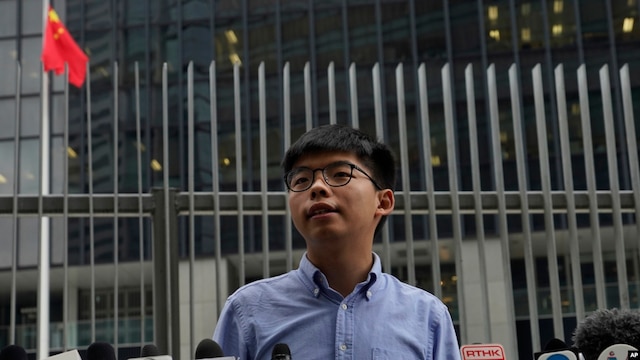
According to reports, Joshua Wong, who is currently serving a prison sentence, will once again face charges of “colluding with foreign forces” under the Hong Kong National Security Law, for which the maximum penalty is life imprisonment. This is not the first time he has been imprisoned for participating in peaceful political activities. From the Occupy Central movement to the era of the National Security Law, this young man’s life trajectory has almost encapsulated the entire process by which Hong Kong has slipped from a bastion of the rule of law into authoritarian governance.
What deserves to be questioned is this: what kinds of “evidence” and “conduct” can be classified as “colluding with foreign forces” warranting life imprisonment? Under a mechanism for handling national security cases that lacks independent judicial review and juries, with judges selected from a list designated by the Chief Executive, the public has virtually no way to verify the specific factual basis of the charges, nor can it effectively monitor whether the trial process is fair. This in itself represents a departure from such fundamental principles of modern rule of law as “no crime or punishment without law” and “open and transparent trials.”
The case of Joshua Wong is not an isolated one. Since the National Security Law came into force, large numbers of pro-democracy figures, civil society activists, and media workers have successively been charged with similar offenses, creating a systemic “chilling effect”—criticizing the government, organizing rallies, or giving interviews to foreign media can all potentially be interpreted as “endangering national security.” When the power to interpret a law is highly concentrated in administrative and law-enforcement authorities, while the judiciary lacks genuine independence, “national security” can easily become distorted into a tool for suppressing dissent and eliminating opposing voices.
At its root, the common underlying disease behind these phenomena is a one-party authoritarian system in which power is not subject to restraint. Within an institutional framework lacking genuine democratic elections, separation of powers, and an independent judiciary, so-called “governing the country according to law” often degenerates into “ruling the people by law”: the law becomes an instrument of rule rather than a shield protecting citizens’ rights. Hong Kong’s once-prized judicial independence and press freedom have been gradually eroded precisely through the infiltration of this systemic logic.
History has repeatedly demonstrated that only the establishment of a constitutional democratic system—including a genuine separation and mutual checks and balances among the legislative, executive, and judicial branches; a judiciary independent of political power; and fundamental human-rights protections for citizens, including freedom of speech, association, and the press—can fundamentally prevent “national security” from being abused as a catch-all offense for suppressing dissent. A healthy political system should allow people with different political views to express their demands through lawful channels, rather than using life imprisonment to intimidate an entire generation of young people who strive for freedom.
Joshua Wong’s ordeal is a tragedy for Hong Kong, and also a microcosm of the fate of citizens living under authoritarian systems. Only when power is truly locked inside the cage of institutions will citizens’ dignity and freedom cease to be sacrificed in the games of power.
News background: The original report on which this commentary is based can be found at Deutsche Welle: DW-WORLD.DE。