This English version may have been machine-generated from the Chinese original and may not convey the original meaning accurately.
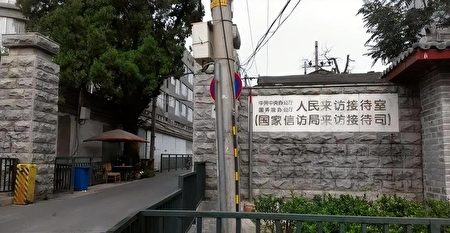
China’s National Public Complaints and Proposals Administration has introduced new regulations taking effect in July. Under the name of “standardization,” they impose restrictions in practice: unless members of the public have written documentation issued by local authorities, they may no longer petition across provincial borders or travel to Beijing to lodge complaints. An article interpreting the rules by local officials puts it bluntly: the regulations are designed to set a “threshold” for the public and push problems to be “resolved at the grassroots level.” But the problem is that precisely because local authorities cannot—or do not want to—resolve these issues, people are forced to embark on the long road of petitioning. Now that the threshold has been erected, even the “right to go to Beijing to seek an explanation” is held in the hands of local governments. This does not resolve problems; it welds conflicts in place and leaves them to fester.
The paradox at the heart of the petitioning system has existed for a long time: early surveys by scholars showed that only a tiny proportion of problems were actually resolved through petitions. For years, there have been frequent reports of petitioners being intercepted, held in black jails, and forcibly driven away. Joint operations by petition offices and public security agencies have turned “seeking justice” into a high-risk ordeal. The new regulations merely add another lock to this logic—using administrative procedures to confine conflicts to the grassroots level and performance targets to pressure local officials to “eliminate” the number of petitioners, rather than genuinely addressing their grievances. As one interviewed scholar put it, this is “trying to contain a fire with paper”; paper cannot contain fire forever.
What deserves to be asked is this: why would a regime that claims to be one in which “the people are the masters of the country” rely on layer upon layer of restrictions to prevent people from appealing to the central authorities? The answer is not complicated. From its inception, the petitioning system under one-party rule has been a “pressure-release valve,” not a “corrective mechanism.” Its purpose is not to subject power to oversight or correct mistakes, but to preserve the appearance of the central authorities’ legitimacy—letting people believe that “there is still a just official above,” thereby directing their dissatisfaction with particular officials and specific systems toward appeals in individual cases, rather than toward questioning the entire power structure. Local officials, under intense pressure from “stability maintenance” assessments, try every possible means to reduce the number of petitioners instead of genuinely resolving their grievances. Intercepting petitioners, closing cases, and setting up checkpoints thus become the only “rational” choices.
Behind this lies a system that lacks judicial independence and checks and balances on power, in which citizens cannot genuinely hold officials accountable through elections or the courts. People’s grievances should be adjudicated through an independent judicial system, resolved by accountable local governments, and exposed through free media oversight—not by relying on a piece of “petition” paperwork, a trip to Beijing, or a journey that wagers one’s personal freedom in the hope of winning the compassion of a “great and just official.” When the judiciary becomes an appendage of power, when the media cannot report local injustices, and when voters cannot remove officials who fail to act, petitioning becomes the only—and also the most fragile—pressure-release outlet. Now even this outlet is being tightened.
Some commentators worry that pressure which cannot be released will eventually erupt in more violent forms—and this is by no means alarmist. History has repeatedly shown that when institutional channels for appeal are blocked, accumulated resentment does not disappear; it is transformed into more extreme confrontation. What can truly defuse social conflicts has never been administrative thresholds, but the separation of powers and checks and balances under constitutional democracy: an independent judiciary that safeguards every citizen’s right to bring a lawsuit, a free media that ensures injustice has nowhere to hide, and accountable local governance that makes officials answerable to voters rather than only to their superiors. Only then will ordinary people no longer have to travel thousands of miles to Beijing to cry out against injustice, but instead be able to reclaim justice in a courtroom close to home. The new petitioning rules may weld shut the road to Beijing, but they cannot weld shut a society’s longing for fairness and justice—that longing will eventually seek an outlet.
News background: The original report on which this commentary is based can be found at BBC Chinese。