This English version may have been machine-generated from the Chinese original and may not convey the original meaning accurately.
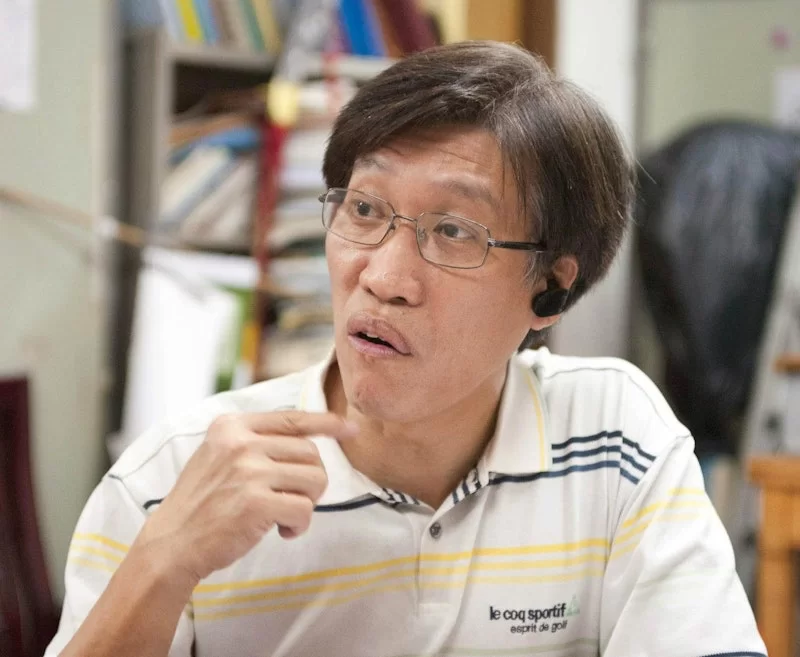
The Macau Primary Court recently announced that former legislator Au Kam San had been formally charged with three offenses, including “subversion of state power,” and could face a maximum sentence of 25 to 30 years in prison. This is the first time the Macau National Security Law has been invoked since it was enacted in 2009, marking the awakening of a law that had lain dormant for years to deal with a citizen nearing the age of 70 who had long engaged in peaceful political participation, at a time when Macau’s political atmosphere has become comprehensively tightened.
According to reports, the core conduct of which Au Kam San is accused is “providing information to overseas organizations” as well as participating in and organizing June Fourth commemorative activities over the years. It is worth asking: how can commemorating a historical event that took place in one’s own country and caused profound trauma be equated with “subversion of state power”? The answer lies not in the text of the law itself, but in how power defines “endangering national security”—when the authorities can arbitrarily expand the boundaries of national security offenses, any dissent, and any public expression of historical memory, can potentially be repackaged as “collusion with foreign forces.”
An even more alarming detail is that during the pretrial proceedings, the court acknowledged that “because of the necessity of protecting national security interests,” the National Security Commission had issued a binding review opinion and intervened in the defendant’s choice of counsel and defense arrangements. This means that beneath the claim of “ensuring the suspect’s litigation rights in accordance with the law,” what truly determines the direction of the case is not independent judicial judgment, but a political institution that stands above the courts. When judges themselves must “seek instructions and report” to political authorities, judicial independence has already become nominal—this is not an isolated phenomenon in Macau, but an extension of the logic under the system as a whole that “the Party leads everything, and the courts obey the Party.”
Looking back at Au Kam San’s political career, the trajectory of the problem is not difficult to discern: from his election as a legislator in 2009, to his decision not to seek reelection in 2021, and then to fellow lawmakers having their candidacies revoked for participating in June Fourth commemorative activities, with their appeals rejected, the only three remaining pro-democracy legislators in Macau have now completely disappeared from the establishment. The 2024 chief executive election, in which the new chief executive was selected with a “sole candidate,” precisely confirms the ultimate picture of this system: elections without genuine competition, a legislature without checks and balances, and a judiciary without independence. What remains is merely a procedural shell used to retroactively endorse the will of those in power.
The expanded application of the national security law, the criminalization of historical memory, and the political scrutiny of lawyers’ defense rights—these seemingly scattered phenomena in fact share the same source: a one-party authoritarian system in which power is unconstrained, and which is inherently inclined to eliminate every independent voice, whether it comes from the legislature, the courtroom, or a candle in the street. When power can authorize, scrutinize, and judge itself, any citizen may one day discover that their act of commemorating history or expressing dissent has been redefined as “subversion.”
What can truly prevent such tragedies from recurring is neither the revision of a particular law nor hope placed in some “enlightened” official, but the establishment of the fundamental framework of constitutional democracy: a legislature produced through free elections and genuinely representative of public opinion; a judicial system independent of the will of the executive and the Party; a free space for the media and freedom of expression without threats; and the protection of citizens’ historical memory and political expression through fundamental rights guaranteed by the constitution. Only when the three branches are genuinely separate and power is truly subject to checks and balances will citizens no longer have to pay the price of their freedom, or even half their lives, for commemorating history and acting according to their conscience. The Au Kam San case is not the end, but a mirror reflecting the systemic pathology of the entire regime.
News background: The original report on which this commentary is based can be found at BBC Chinese。