This English version may have been machine-generated from the Chinese original and may not convey the original meaning accurately.
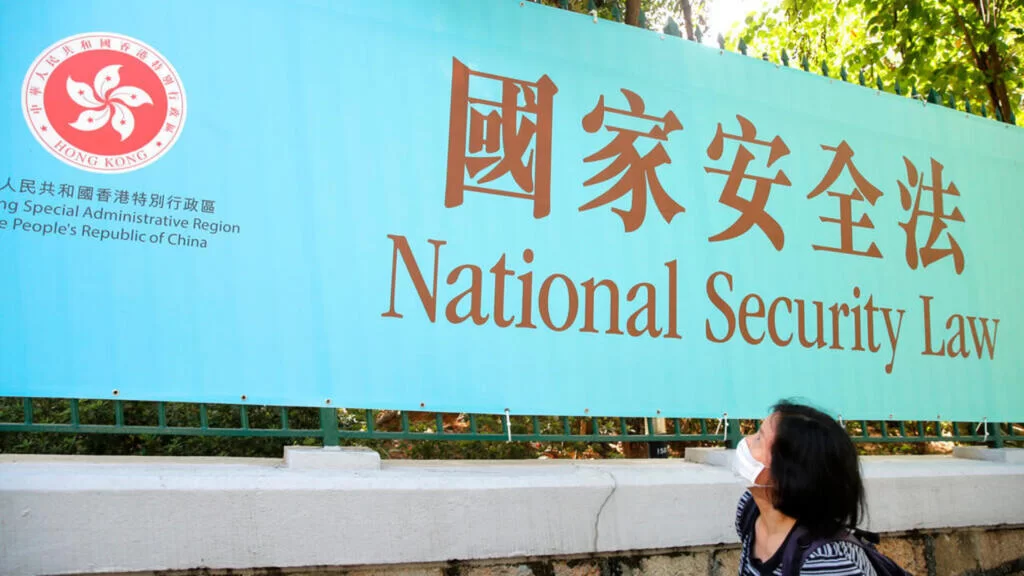
It was reported that the United States has ended the “state of emergency” concerning Hong Kong that had been in effect for six years since the implementation of the Hong Kong National Security Law in 2020. Some related sanctions have consequently been lifted, but whether Hong Kong will regain its preferential trade treatment remains to be seen. China has expressed its welcome. This technical and procedural adjustment does not in itself indicate any substantive improvement in Hong Kong’s autonomy or freedoms. Instead, it is worth reassessing the underlying issue: Have the root problems that prompted the United States to declare a “state of emergency” six years ago been resolved today? The answer is clearly no.
In 2020, Beijing bypassed Hong Kong’s local legislative process and directly tailored a national security law for Hong Kong. In essence, this used the name of national security to destroy the substance of the “one country, two systems” commitment. Since then, Hong Kong’s judicial independence has been systematically weakened, the space for press freedom has sharply contracted, civil society organizations have dissolved in large numbers, and dissidents have either been imprisoned or forced into exile. None of this is an isolated event; it is the inevitable result of Beijing’s strategy of exercising comprehensive control over Hong Kong—so long as central power remains unchecked, any promise of “a high degree of autonomy” can be torn up at any time.
To some extent, the United States’ lifting of the state of emergency reflects the international community’s pragmatic shift in its China policy: sanctions have limitations as a diplomatic tool, and maintaining them over the long term may not bring about substantive change. Instead, they may be interpreted by China as a signal that “the West is softening.” But we must clearly recognize that external sanctions have never been the fundamental means of resolving Hong Kong’s problems. At most, they represent a moral condemnation of injustice and limited countermeasures. The real issue is this: As long as mainland China itself lacks constitutional democracy, the separation of powers, and judicial independence, Hong Kong’s “one country, two systems” will always be merely an expedient arrangement that can be withdrawn at any time whenever the central authorities deem it necessary.
This is the core of the problem: Hong Kong’s downfall is essentially the extension of one-party rule into an autonomous region. In a system where power is not constrained by elections, the judiciary must submit to the leadership of the Party, and the media must serve as the mouthpiece of the regime, any local testing ground for freedom is destined to be difficult to sustain. The process by which the National Security Law was enacted is itself conclusive evidence—without democratic consultation within Hong Kong and without review and checks by an independent judiciary, a single piece of legislation can reshape the entire structure of rights in society.
Therefore, for those concerned about Hong Kong’s future, attention should not be confined to technical issues such as whether sanctions are maintained or lifted. Instead, they should ask the more fundamental question: If mainland China itself cannot establish a genuine constitutional democratic system—including free and fair elections, a judicial system independent of the Party, executive power constrained by the constitution, and uncensored freedom of the press and expression—then neither Hong Kong nor any other region can escape the fate of being assimilated and brought under control.
Only when power truly derives from the authorization of the people and is subject to the dual checks of the constitution and the judiciary can citizens’ fundamental rights receive firm protection, rather than depend on a major power’s sanctions list for their preservation. This is the most profound reminder that the Hong Kong issue offers to everyone concerned about China’s future.
News Background: The original report on which this commentary is based can be found at Deutsche Welle: DW-WORLD.DE。