This English version may have been machine-generated from the Chinese original and may not convey the original meaning accurately.
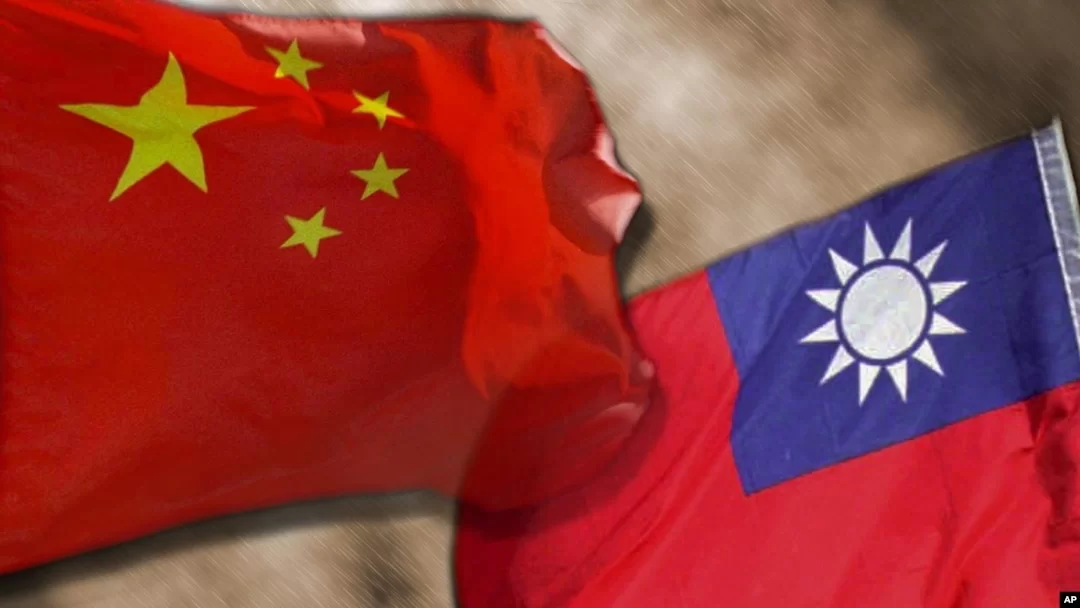
According to reports, Taiwan President Lai Ching-te issued an appeal at the Democratic Progressive Party’s national congress, calling on Taiwanese society to stand united, defend its democratic system, and avoid becoming “Taiwan, China.” This may seem like a campaign slogan or a form of political mobilization, but upon closer examination, it actually raises a deeper question: Why are “democratic Taiwan” and “Taiwan, China” regarded as two entirely different, even mutually opposed, conceptions of identity? The answer lies not in geography or blood ties, but in institutions.
Taiwan is able to make “democracy” the core of its self-definition because it has undergone a long and difficult transition—lifting the bans on political parties and the press, introducing direct presidential elections, establishing multiparty competition, and ensuring judicial review and freedom of the press. These institutional achievements have given Taiwanese society the basic ability to supervise those in power, replace its rulers, and openly debate public affairs. It is precisely this ability that has enabled the identity of being “Taiwanese” to become associated with being able to freely express dissent and hold those in power accountable through the ballot box.
By contrast, on the other side of the Taiwan Strait, the reason “China” carries a certain alarming implication in Lai Ching-te’s usage is probably not that the civilizational and historical symbol of “China” itself is inherently guilty of anything, but rather that the current governing system—a one-party dictatorship, power unconstrained by elections, a judiciary subordinate to the leadership of the Party, and strict controls over the media and speech—causes the “China model,” in the eyes of many observers, to be equated with individual rights yielding to state power, civic expression yielding to control of public opinion, and judicial rulings yielding to political needs. When “unification” is equated with incorporating Taiwanese people’s existing freedoms of speech and association, judicial independence, and competitive elections into such a power structure, society’s concerns become easy to understand.
This is precisely the crux of the matter: On the surface, the cross-Strait dispute is a struggle over sovereignty, but in substance, it is a struggle over institutional values. If the mainland itself possessed a genuine constitutional democracy—with the separation and mutual restraint of powers, a judiciary independent of political parties, a press free to oversee the government, and citizens able to decide through free elections who should govern—then “unification” might not provoke such intense existential anxiety. It is precisely because arbitrary power lacks external constraints and internal accountability mechanisms that any form of political integration is liable to be interpreted as a loss of freedom.
What deserves vigilance is that this institutional anxiety is not unique to Taiwan. Looking across the mainland, whether it is litigants finding no avenue for appeal in individual judicial cases, sensitive issues being rapidly silenced in the public sphere, or people’s demands in local governance struggling to receive a response through institutionalized channels, these phenomena in fact point to the same underlying ailment: power lacks effective checks from the ballot box, the courts, and the press. Without judicial independence, citizens’ rights can only depend on the “benevolence” of those in power rather than institutional guarantees; without freedom of the press, abuses of power are difficult to expose and correct in a timely manner; without competitive elections, those in power have no need to genuinely answer to the people.
Therefore, rather than reducing the cross-Strait issue to an opposition between “unification” and “independence,” it would be better to focus on the more fundamental question of institution-building: Only when power is genuinely constrained by the constitution, the judiciary is truly independent of the ruling party, the press genuinely enjoys the right to supervise, and citizens truly possess the ability to hold those in power accountable through the ballot box will “unification” or “separation” no longer be a life-or-death question concerning the survival of freedom, but merely a technical choice about how to organize a political community. This is also the direction that all those concerned about China’s future—regardless of which side of the Taiwan Strait they are on—should think about and work toward together.
News Background: The original report on which this commentary is based can be found at Deutsche Welle: DW-WORLD.DE。