
This English version may have been machine-generated from the Chinese original and may not convey the original meaning accurately.
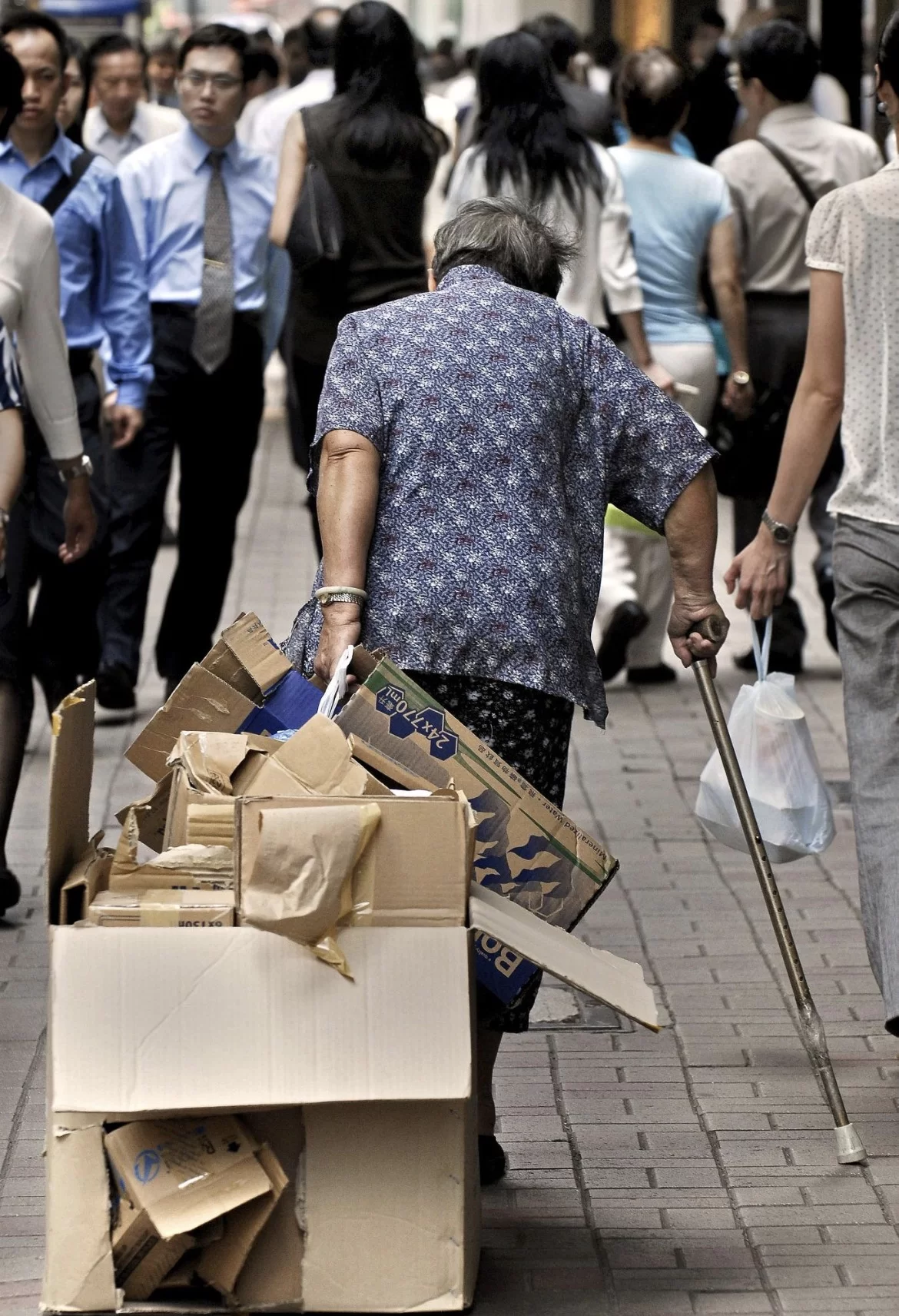
The fact that Chinese consumers are "no longer spending" appears on the surface to be a cyclical economic phenomenon—a sluggish real estate market, high youth unemployment, and weak consumer confidence. But upon closer examination, the root of these "structural problems" is not simply a matter of flawed economic policy, but the inevitable result of the long-term operation of an unchecked power system.
First, we must ask: why do people prefer to save rather than spend? The answer is a lack of security. A weak social security system, heavy spending burdens on healthcare, education, and elderly care, and uncertain employment prospects—these are not new problems, but the result of the government's long-term concentration of resources and power on state-led investment and production, rather than genuinely building a social safety net covering the entire population. It has been reported that Beijing has repeatedly rolled out consumption subsidies and five-year plans in an attempt to stimulate domestic demand, but the logic behind policy-making remains top-down administrative control, rather than institutional design that responds to the real needs of the people. When decision-making power is highly concentrated and there is a lack of public feedback mechanisms and channels for representative accountability, even the most generous subsidies only treat the symptoms, not the underlying disease.
Second, the persistently high youth unemployment rate reflects the deep-seated contradiction of an economic structure that has long been dominated by power-driven resource allocation, with inadequate market competition and property rights protection. The formation and bursting of the real estate bubble is likewise closely tied to a governance model in which local governments depend on land finance and lack transparent accountability. These risks are ultimately borne by ordinary families, yet accountability for decision-making failures is nearly impossible to pursue—because without an independent judiciary, a free press, or a legislature capable of checking executive power, the public has no way of knowing the true reasons behind policy failures, let alone the means to demand accountability through the ballot box or the courts.
The essence of consumer confidence is, in fact, confidence in the system. Whether a citizen feels free to spend and invest in the future depends on whether they believe their property rights are protected by law, whether they believe social security won't evaporate overnight due to a policy shift, and whether they believe they have channels to oversee and constrain the abuse of power. Under a one-party dictatorship where power is unchecked, such confidence is difficult to establish—because the rules can be rewritten at any time to suit political needs, and individual rights will always remain subordinate to the will of those in power.
The real solution does not lie in another round of subsidies or plans, but in institutional reform: establishing constitutional democracy, achieving separation of powers and judicial independence, and enabling citizens to genuinely participate in and constrain public decision-making through free elections and rule-of-law oversight; establishing a social security and fiscal accountability mechanism independent of the executive branch; and safeguarding press freedom so that true economic information and public opinion can circulate openly. Only when every citizen's property rights, personal rights, and freedom of speech are genuinely protected by the constitution and an independent judiciary can consumer confidence be built on a solid institutional foundation, rather than being barely sustained through temporary administrative stimulus.
The deep-seated problems in China's economy have never been simply about "insufficient consumption"—they stem from an unchecked power system's inability to provide citizens with lasting security and dignity. This is the root cause that must be confronted.
News Background: The original report on which this commentary is based can be found at BBC Chinese.