
This English version may have been machine-generated from the Chinese original and may not convey the original meaning accurately.
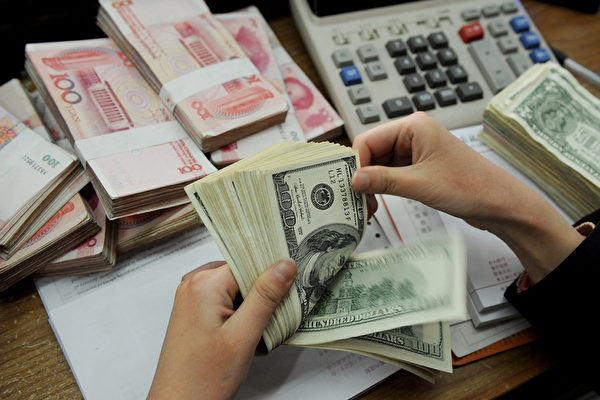
It has been reported that Chinese authorities have recently intensified efforts to collect back taxes on the overseas assets of the wealthy, requiring banks to cooperate in investigating income from offshore investments, with some individual cases reportedly reaching back more than twenty-five years. On the surface, this appears to be a fiscal action aimed at "lawful taxation and plugging loopholes." But upon closer examination, this campaign-style tax pursuit exposes precisely the deepest pathology of the system: power can reach into citizens' property without boundary, while citizens have no independent judiciary or representative institutions through which to constrain it.
The first question to ask is: why can the statute of limitations be extended beyond the norm to twenty-five years? In any society governed by the rule of law, tax law sets clear limitation periods, designed to guarantee taxpayers certainty and fair expectations, and to prevent state power from arbitrarily seizing private property through "settling scores after the fact." In China, however, tax policy can be tightened on an ad hoc basis due to fiscal shortfalls and enforced selectively—demonstrating that so-called "lawfulness" is, in essence, "power-fulness": legal provisions serve the needs of power, rather than power submitting to the law. This is not rule of law, but an extension of rule by men.
The second question is: where does the fiscal shortfall come from? High local government debt, the bursting of the real estate bubble, and slowing economic growth—these structural problems stem precisely from the highly centralized nature of decision-making power and the absence of open budget deliberation and parliamentary oversight. When the fiscal authorities' spending and borrowing need not answer to a legislative body that truly represents the popular will, and when audit and accountability mechanisms exist in name only, the resulting deficits can only be filled by transferring the burden onto existing wealth—especially onto the affluent class, whose assets are traceable and susceptible to intimidation. Tax collection here is not the system correcting itself; it is power transferring the cost of its own failures onto others.
Even more alarming is the fact that banks have been required to cooperate in investigating clients' overseas assets, meaning that citizens' financial privacy has no shield whatsoever against administrative directives. Without independent judicial review, without a warrant system, without any avenue of appeal against the abuse of public power, anyone's property could at any moment be re-examined for political or fiscal reasons. Today it is the wealthy; tomorrow it may well be ordinary depositors and middle-class families.
The choice of the wealthy to emigrate and of capital to flow outward is, in essence, a form of "voting with one's feet"—when people cannot constrain power through the ballot, the courts, or an independent press, the only way to protect oneself is to leave. This precisely confirms that: without constitutional democracy and the separation of powers, there is no institutional guarantee of property rights; without judicial independence, any tax policy can degenerate into a tool of selective enforcement; and without freedom of press and speech, the public cannot even know the true motives behind policymaking or whether its implementation is fair.
The real solution has never been "how to collect back taxes more efficiently," but rather building an institutional framework in which power is checked, decision-making is supervised, and the judiciary is independent of the executive: budgets must be deliberated and made public through representative institutions, amendments to tax law and their retroactive application must be ruled upon by an independent judiciary as to their constitutionality, and citizens' property rights must receive substantive protection under the constitution and the courts. Only in this way can fiscal crises be resolved through transparency and accountability, rather than through digging up old accounts, pressuring banks, and chilling society into temporary submission.
If a country relies for the long term on "campaign-style tax pursuit" to sustain its fiscal operations, this reveals not the strength of its governance capacity, but the exhaustion of institutional trust. Only constitutional democracy, the separation of powers, and judicial independence can genuinely safeguard property rights, tax justice, and civic dignity—rather than leaving power free to redefine at will the boundaries of what is "legal" and what is "owed in taxes."
News Background: The original report on which this commentary is based can be found at Deutsche Welle: DW-WORLD.DE.