This English version may have been machine-generated from the Chinese original and may not convey the original meaning accurately.
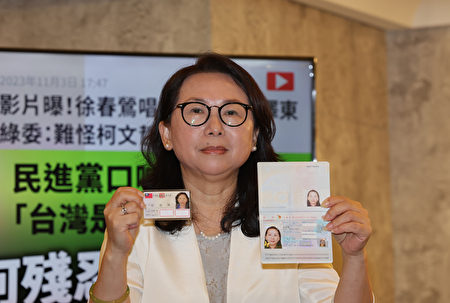
Xu Chunying’s seven-year sentence handed down by the New Taipei District Court at first instance was not fundamentally because she is a “mainland spouse,” nor because she had contact with people from mainland China. Rather, based on the evidence, the court found that she had accepted instructions from individuals linked to mainland China, intervened in Taiwan’s elections, and was also involved in underground currency exchange, fraud, and document forgery. If these findings withstand scrutiny through the evidence, the defense, and the appeals process, then no one—regardless of identity, place of origin, or political stance—can interfere in democratic elections under the direction of a foreign government.
But what truly deserves examination in this case is not merely whether she “should have been convicted,” but how a democratic society should draw the line between security and freedom. Normal cross-strait exchanges, political advocacy, and the expression of opinions are fundamentally different from accepting instructions, commissions, or funding from a foreign regime to manipulate elections. The law must clearly define the conduct at issue, the requisite intent, and the evidentiary standards. Judicial proceedings must also be open and fair, while allowing full defense and avenues for redress. Otherwise, once “foreign forces” becomes an overly elastic political label, ordinary participants in exchanges, mainland spouses, and specific ethnic or social groups may be collectively viewed with suspicion, and civil rights may wither amid fear.
The risks Taiwan faces are real. But the reason it is able to investigate, prosecute, and have courts hear such cases is precisely that it has electoral competition, relatively free media, and mechanisms for judicial review. The value of a system does not lie in guaranteeing that no one will question any verdict; it lies in allowing verdicts to be tested against evidence, challenged by lawyers, and reviewed by higher courts, while preventing the government from securing convictions based solely on political needs. This is the fundamental difference between constitutional democracy and one-party dictatorship.
From a broader perspective, if the Chinese government influences the politics of other countries through individuals, organizations, and funding, the root cause is that its power lacks democratic authorization and institutional checks and balances. Domestically, when the press and speech are not free, the judiciary is not independent, and citizens lack effective channels to oversee the government, power can easily package political influence as the national interest and extend it abroad. Preventing infiltration cannot rely solely on intelligence agencies and harsh penalties; it also requires transparent political financing, an independent judiciary, a free press, and public oversight.
Therefore, Taiwan must both uphold the bottom line that elections cannot be controlled by foreign governments and defend the bottom lines of individual dignity, the presumption of innocence, and freedom of expression. A truly resilient democracy does not exclude people because of their background; it punishes demonstrable violations of the law. It does not silence citizens; it ensures that power operates under the Constitution, the ballot box, and the law. Only when constitutional democracy, the separation of powers, judicial independence, and fundamental human rights are effectively protected can a country both resist external interference and avoid creating new forms of unfreedom in the name of addressing internal threats.
News background: The original report on which this commentary is based can be found at Radio Free Asia Mandarin.