This English version may have been machine-generated from the Chinese original and may not convey the original meaning accurately.
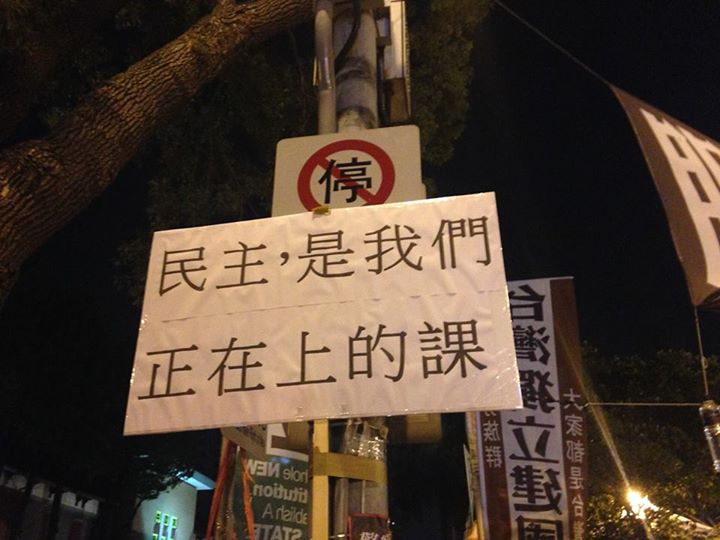
The reason Taiwan makes Beijing feel “concerned” lies not merely in its geographical location or military deployments, but more importantly in the fact that, as a Chinese-speaking society, it demonstrates another political possibility: people can choose their leaders, governments must be accountable through elections, political parties can compete, the media enjoys relatively broad freedom, and the judiciary is independent. As the American experts cited in the report point out, Taiwan has therefore become a frontline in the competition between democratic and authoritarian systems.
This also explains why the pressure Taiwan faces is not limited to the military sphere. Military threats can be seen, whereas information and political influence are often more concealed: propaganda, social media manipulation, networks of proxies, and interference in public discussion can all erode the public’s trust in elections, government, and democratic institutions. The challenges described in the report still require further verification through specific cases, but their institutional logic is clear: when power cannot be obtained through open competition, cannot be reviewed by an independent judiciary, and does not need to answer to a free press or its citizens, it is more likely to view dissent as a threat and to treat cross-border censorship, surveillance, and influence operations as tools for maintaining its rule.
Therefore, the Taiwan Strait issue cannot be understood solely as a military confrontation, nor can it be reduced to a conflict of nationalist sentiment. It also concerns a fundamental question: Is the government authorized by the people, or is it monopolized by a political organization that is not subject to effective checks and balances? Under one-party rule, there are no genuinely democratic elections; the legislature, executive, and judiciary struggle to form meaningful checks and balances; and news and speech are restricted. Citizens consequently lack institutional channels for peacefully correcting misguided policies and holding those in power accountable. The less constrained power is, the more likely it is to equate social security with regime security, criticism with hostility, and a free society like Taiwan with a “model threat” that must be suppressed.
Taiwan’s defensive capabilities are of course important, but democracy itself is also a public institution that needs to be defended. Only constitutional democracy, the separation of powers, judicial independence, free elections, and the effective protection of basic human rights such as freedom of speech, of the press, and of association can ensure that political competition takes place within the system, that policy mistakes can be corrected, and that national security no longer becomes an excuse for suppressing citizens.
What Taiwan demonstrates is not some abstract ideology, but the dignity and freedom of choice that everyone should possess: people have the right to decide who governs them, and they also have the right to monitor, criticize, and replace their government. What Chinese mainland society truly needs to consider is not how to eliminate this example, but why a free, accountable, and constrained government can instead make society more stable, prosperous, and successful.
News background: The original report on which this commentary is based can be found at News - Voice of America.