This English version may have been machine-generated from the Chinese original and may not convey the original meaning accurately.
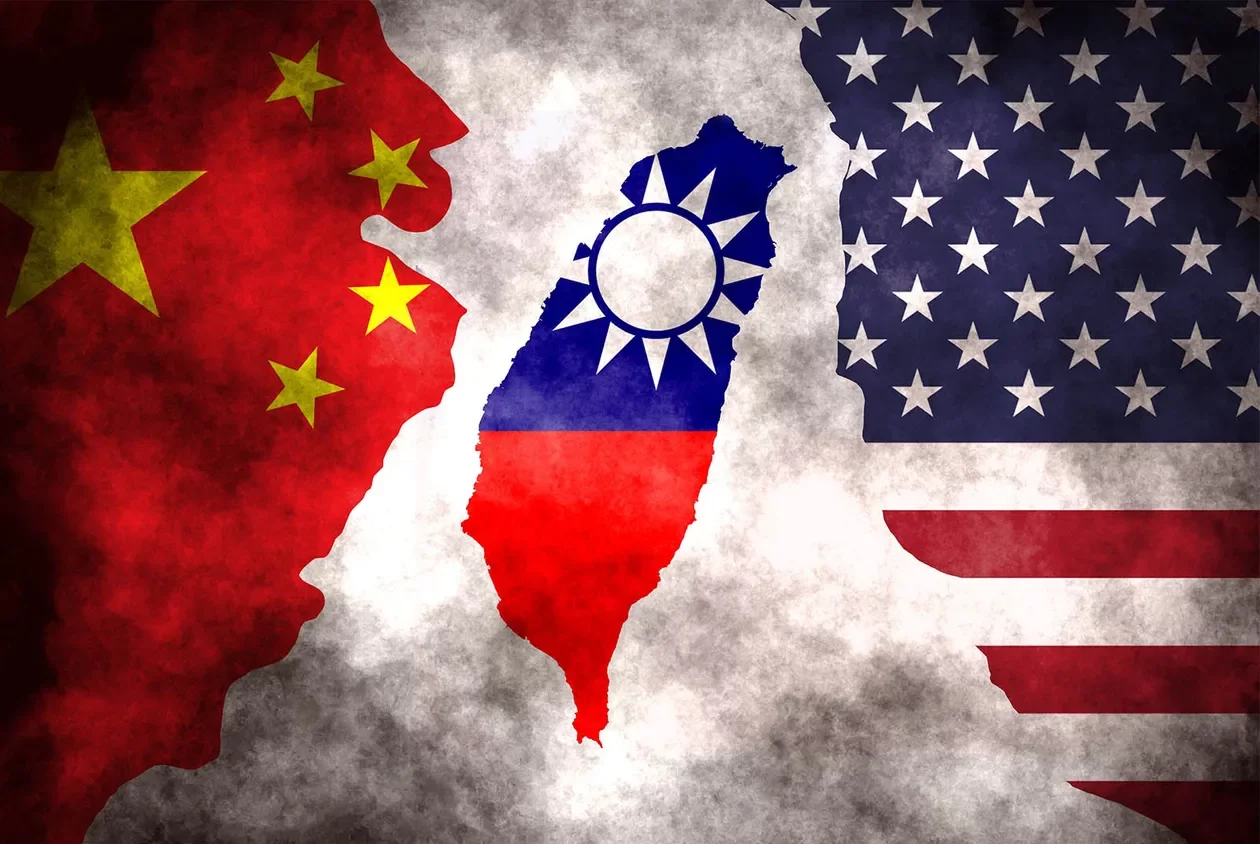
What is most worth asking about in this report may not be whether Xi Jinping will set foot on U.S. soil in late September, but rather what language the various parties are using to discuss Taiwan.
Beijing’s formulation follows a fixed structure: Taiwan is the “most important issue” in China-U.S. relations, and if it is not handled properly, “a collision or even conflict will occur”; the Taiwan Strait issue is described as a “red line that must not be crossed.” These phrases sound as though they are describing objective facts, but in reality they accomplish several key shifts: they recast Beijing’s claims over Taiwan as the core issue in China-U.S. relations, package actions Beijing might take as passive consequences of conflict, and compress Taiwan—from a society with its own political choices—into an “issue” or a “red line” in relations between great powers.
Thus, Kyodo News’ reported claim—that if the United States approves any “tens-of-billions-of-dollars” arms sale to Taiwan before the summit, Beijing might cancel the meeting—ceases to be merely diplomatic pressure. Instead, it appears to follow a logic that has already been pre-legitimized by rhetoric: since Taiwan is China’s “core interest,” the United States must take Beijing into account when handling arms sales; since the summit is a diplomatic “victory” Trump urgently needs, whether Xi travels to the United States can become a bargaining chip. The report also notes that China’s authorities have yet to officially announce the itinerary. This unconfirmed visit has already been assigned a transaction price.
The ambiguity of the language is precisely what leaves room for a deal. Beijing will not publicly say, “Use Taiwan in exchange for the summit,” because that would expose the fact that it treats Taiwan as a bargaining object; instead, it will say that it opposes “Taiwan independence” and demand a review of existing arms-sale packages. But who defines what “opposing Taiwan independence” means, and whether the people of Taiwan can participate in making that decision, are omitted from the sentence altogether. A political demand concerning Taiwan’s future is rewritten as a policy position that the United States should adopt; the wishes of the Taiwanese people are not rejected, nor even placed on the agenda—they simply disappear.
Washington’s language makes this disappearance easier. Ryan Hass criticized Trump’s public demand that Taipei “remain calm,” saying it amounted to sending Beijing the signal that “U.S. security support for Taiwan is negotiable with China.” The key issue here is not only that policy might change, but the very notion of “negotiability”: when the United States presents its security commitment as a bargaining chip that can be exchanged, Taiwan shifts from being a subject in the relationship to becoming the vessel for that chip.
The experts cited in the report offer another layer of irony. Taiwan is simultaneously described as a “model of liberal democracy,” a “loyal ally” of the United States, and a globally important advanced semiconductor hub; yet in Trump’s ordering of priorities, the latter two are probably less important than chips. Thus, Taiwan’s democratic values can serve as a virtue in publicity, while its chips become its practical value in negotiations. The people, institutions, and choices of a society are ultimately condensed into an asset that may or may not enable the U.S. president to declare “victory.”
The metaphor of a “menu” is so jarring precisely because it exposes the rhetoric described above: Beijing puts Taiwan on the menu of “core interests,” Washington may put arms sales on the menu of negotiations, and Taipei is then asked to find a way to sit “at the table.” But no matter how the menu is rewritten, it is Taiwan that is truly being discussed, priced, and exchanged; the people who can genuinely decide Taiwan’s fate, meanwhile, remain excluded from this great-power narrative.
News background: The original report on which this commentary is based can be found at BBC Chinese。