
This English version may have been machine-generated from the Chinese original and may not convey the original meaning accurately.
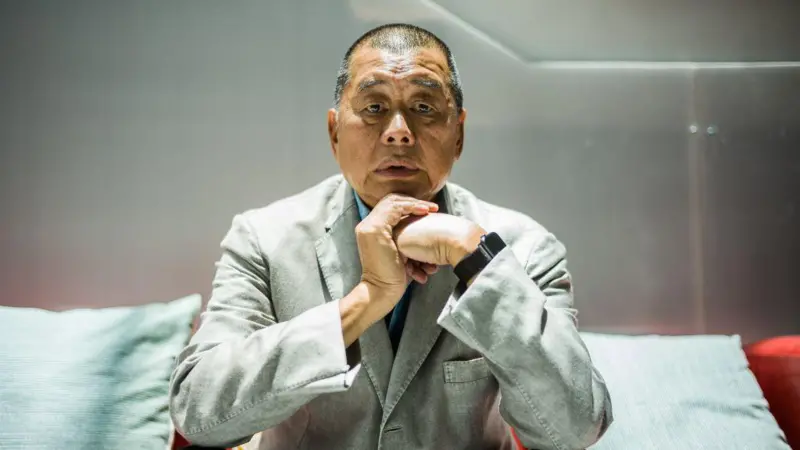
The most striking detail in the Jimmy Lai case is not simply that he may face a sentence of up to 20 years, but the phrase his supporters repeatedly emphasize: he “posed no threat whatsoever.” This is not a demand that political figures enjoy special immunity. Rather, it raises a more fundamental question: when a state restricts an individual’s freedom in the name of security, what exactly may be taken away, and what must still be preserved?
A person’s expression of views, operation of a newspaper, and use of public platforms to support freedom and democracy do not, of course, amount to permission to harm others or commit violence. The state has the right to address genuine, specific, and demonstrable threats of violence, and may also restrict certain conduct under strictly defined conditions. But if “supporting democracy” and “contact with others” in themselves are expanded into criminal risks, the boundary of rights slides from “do not harm others” to “do not express unwelcome positions.” Chris Smith, co-chair of the Congressional-Executive Commission on China, pointed out that under the Hong Kong national security law, “merely contacting other people could subject someone to legal liability.” He even cited a meeting between Xi Jinping and Donald Trump, noting that if this interpretation were applied consistently, even normal diplomatic contact between national leaders could fall into dangerous territory.
This is how freedom is eroded little by little: first by placing speech alongside security threats, and then by bringing journalists, democracy advocates, former legislators, and civil society figures under the same national security apparatus. The record shows that since the Hong Kong national security law took effect in June 2020, the Hong Kong authorities have continued to use the law to arrest and detain members of these groups; the hearing also found that procedural safeguards and judicial independence have been weakened. A person does not automatically lose the right to clear charges, a fair trial, independent judgment, and humane detention simply because they have been accused of endangering security.
Medical care for detainees, in particular, must not be obscured by the security narrative. Jimmy Lai’s son, Sebastien Lai, fears that if his father dies in prison, it will become “a disgrace”; Luke de Pulford, meanwhile, said that Lai’s deteriorating health further demonstrates that he poses no threat to anyone. Regardless of whether a person has been convicted, once the state deprives them of their liberty, it assumes responsibility for their life and health. Medical neglect, abuse, torture, and inhumane detention conditions do not become acceptable merely because a case has been labeled a “national security” matter.
The difficulty of safeguarding these rights under Hong Kong’s current system lies not only in the name of the law, but in the fact that security authorities can determine who constitutes a risk and what speech constitutes a risk, allowing that judgment to permeate the entire process of arrest, trial, and detention. When oversight mechanisms are inadequate and judicial safeguards have been weakened, it is difficult for individuals to effectively challenge such expansive interpretations; by the time their health deteriorates or even death occurs, any remedy may come too late.
This is why the bill introduced by lawmakers from both parties has concrete significance: if a political prisoner dies in detention and the death is connected to abuse, medical negligence, torture, or inhumane conditions, the U.S. secretary of state must determine the cause of death and the responsible parties within 30 days, and within the following 60 days initiate sanctions under existing law. It cannot replace the rights protections that should exist in Hong Kong, but it at least seeks to make clear to those responsible for detention that incarceration is not the end of their responsibility.
What the Jimmy Lai case truly tests is not whether one person is popular, but whether a state can still acknowledge, when confronted with dissent, that expression, contact, health, and access to due process do not simply vanish because of the words “national security.”
News background: The original report on which this commentary is based can be found at News - Voice of America.