
This English version may have been machine-generated from the Chinese original and may not convey the original meaning accurately.
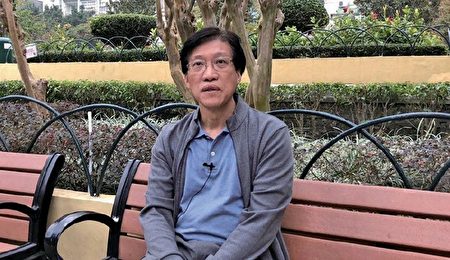
The trial of Macau’s first national security case has begun. What most deserves scrutiny is not merely what sentence Koi Kei In will face, but why a society would handle a person who once served as a legislator and openly expressed his political views for many years by holding proceedings behind closed doors, restricting his choice of lawyer, and cutting him off from contact with his family for an extended period.
According to reports, one year after Koi Kei was arrested, his family still has been unable to contact him or retain a defense lawyer on their own. New regulations passed by Macau this year also allow national security cases to be tried behind closed doors and require participating lawyers to undergo prior vetting. Whether these arrangements were designed specifically for this case remains to be verified, but they show at least that, in the name of so-called national security, the defendant’s basic rights to a public trial, effective legal representation, and contact with family are being placed on extremely precarious ground.
The meaning of the judiciary is not to rubber-stamp those in power, but to constrain them. Closed-door proceedings prevent the public from knowing the evidence underlying the charges, while compulsory “court-appointed lawyers” may reduce the defense to a procedural ornament. If a defendant cannot freely choose a lawyer, while lawyers are subject to prior vetting; if the public cannot attend, the media cannot investigate independently, and the family cannot even confirm the person’s circumstances, then even if the final judgment formally comes from a court, it will be difficult to believe that this was a genuinely fair trial.
Koi Kei previously participated in pro-democracy activities, organized commemorations of June 4, and publicly criticized the government’s policies. Whether these actions constitute specific crimes must be determined by clear and foreseeable laws and through open and independent judicial proceedings—not by broadly classifying someone as a threat to national security merely because of their political views, public statements, or contacts with people overseas. Repeatedly securitizing peaceful expression, historical commemorations, and public criticism will not preserve social stability; it will instead create a climate of fear in which everyone censors themselves.
The root of the problem lies not in the technical arrangements of a particular case, but in a one-party system lacking democratic authorization and checks on power. When the legislature, executive, judiciary, and national security agencies all lack genuinely independent oversight, and when the space for news and free expression is constricted, the law can become a tool for suppressing dissent rather than a shield protecting rights. Macau’s closed-door trial today also serves as a warning to Hong Kong and other regions: without constitutional democracy, the separation of powers, judicial independence, and press freedom, any promise to “govern the country according to law” can change with the needs of those in power.
Civil rights are not gifts bestowed by the state; they are the dignity of every individual and cannot be arbitrarily taken away. Regardless of whether people agree with Koi Kei’s political views, they should uphold public trials, free legal representation, the presumption of innocence, and basic human rights. A truly secure society is not one in which everyone remains silent, but one in which citizens can criticize the government and power must be subject to the joint constraints of law and the people.
News background: The original report on which this commentary is based can be found at News - Voice of America.