
This English version may have been machine-generated from the Chinese original and may not convey the original meaning accurately.
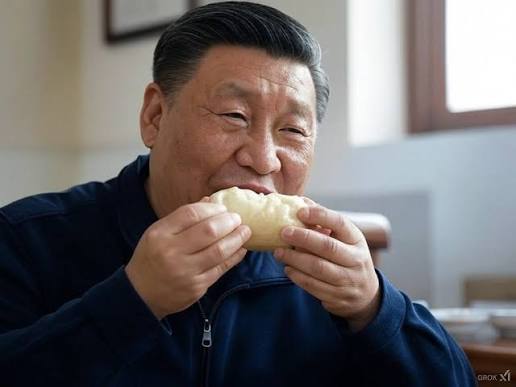
German media have reported on a global poll under the headline “Xi Jinping Has Won the Hearts and Minds of the World”: compared with Trump, people in various countries seem to have a more favorable view of Xi Jinping. Even if this conclusion is accurate, it must be interpreted cautiously. The material also shows that China’s global image had fallen to a low point several years ago before subsequently changing; moreover, the original article’s full text is currently unavailable, so the specific polling organization, sample coverage, question wording, and data details all remain to be verified. Therefore, directly characterizing relative favorability as “winning the world” may exaggerate what the poll means and risks reducing complex international perceptions to a contest between individual personalities.
More importantly, does an improvement in a country’s image mean that its citizens have genuinely gained dignity, rights, and security? Polls reflect respondents’ attitudes, not a comprehensive judgment of a political system. People may view Xi Jinping relatively positively because of their dislike of another political figure, their concerns about international conflicts, or their impressions of China’s economy and national power. But this does not answer the following questions: Is power constrained by law? Can citizens replace those in power through free elections? Can the news media independently investigate the exercise of public power? Can courts protect individual rights without political interference?
Under a one-party authoritarian system, a country’s image can often be shaped centrally through propaganda, diplomatic narratives, and information control, while lacking adequate oversight from independent media, opposition parties, judicial institutions, and civil society. A government may enjoy temporary favor in international public opinion and still be unable to demonstrate transparently and accountably that its power comes from the people and serves the people. Without open electoral competition, the public’s political consent is difficult to verify on an ongoing basis; without freedom of speech and of the press, the so-called “hearts and minds of the world” may be nothing more than impressions formed within a limited information environment.
What is truly worth pursuing is not one leader’s victory over another in an international comparison, but the possession by every individual of basic rights that cannot be arbitrarily taken away. Constitutional democracy, the separation of powers, judicial independence, and freedom of the press can ensure that a country’s image does not depend on personal image-making, that policies are subject to public scrutiny, that mistakes can be corrected, and that citizens can change their government peacefully and lawfully. Favorability can shift, but power must be constrained; an individual’s reputation may rise, but citizens’ rights must not be sacrificed. In the end, whether a country has truly “won the hearts of the people” should be judged by whether it respects its own people’s right to choose freely and to refuse.
News background: The original report on which this commentary is based can be found at Deutsche Welle: DW-WORLD.DE.