This English version may have been machine-generated from the Chinese original and may not convey the original meaning accurately.
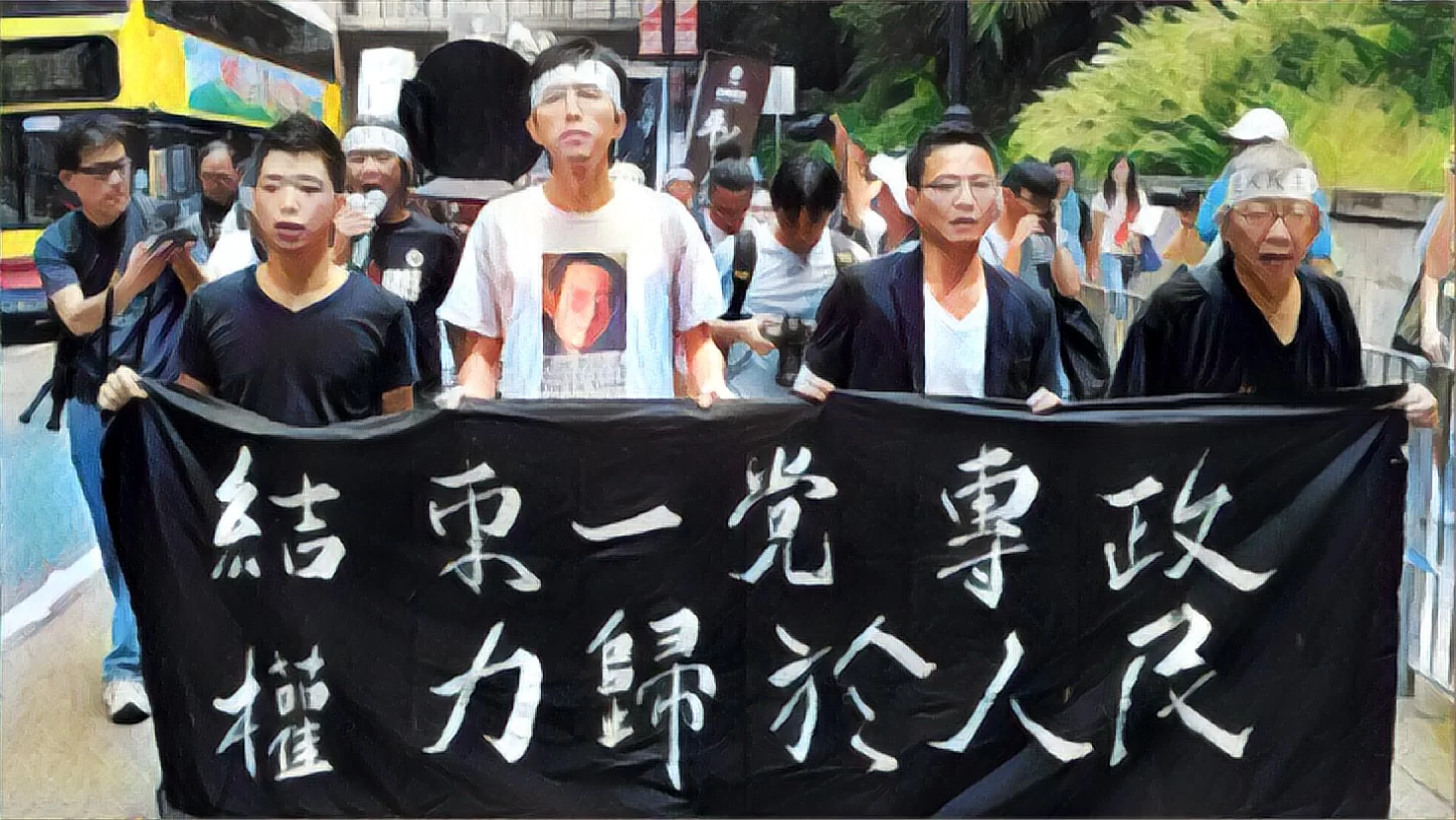
The Hong Kong High Court found the Hong Kong Alliance in Support of Patriotic Democratic Movements of China, Lee Cheuk-yan, Chow Hang-tung, and Albert Ho guilty of “inciting others to subvert state power.” The significance lies not merely in the rise or fall of one organization, but in whether a society can continue to accommodate different political views and allow its citizens to discuss the country’s future peacefully.
According to reports, the court found that the prosecution had failed to provide sufficient evidence to prove that the defendants had incited others to overthrow the organs of the central government of China. At the same time, it held that their insistence on “ending one-party dictatorship” after the implementation of the Hong Kong National Security Law constituted “other unlawful means,” even though they had neither used nor advocated violence. This creates a legal dilemma that must be confronted: when “unlawful means” can be interpreted as conduct that violates relevant laws, and those same laws bring the political advocacy of ending one-party rule within their scope, expressing that advocacy itself may be presumed to be a criminal act. In this way, the law is no longer merely restraining violence and actual harm, but becomes a tool for defining ideological and political loyalty.
For many years, the Alliance has commemorated June 4, called for historical rehabilitation and accountability, and advocated “building a democratic China.” Whether these positions are correct can be tested through public discussion; but in the absence of violence or any actual attempt to seize power, being convicted of subversion solely for advocating a change to the political system amounts to denying the legitimacy of peaceful political competition. A truly confident system should allow citizens to criticize the ruling party and demand democratic reform, and should also allow voters to decide through free elections who will govern, rather than defining “ending one-party dictatorship” as an untouchable forbidden zone.
More alarming is that the case was heard by judges designated under the National Security Law, while two of the defendants had reportedly been held in custody for nearly 1,800 days. The court emphasized that the case was not a trial of the June 4 crackdown or democratic issues, but when the law itself places such political expression under criminal punishment, politics and law cannot simply be separated. Without freedom of the press, freedom of speech, and an independent judiciary, society also lacks institutional channels for scrutinizing official narratives and holding public authorities accountable.
The common underlying disease in cases of this kind is that under one-party dictatorship, power lacks effective checks, the judiciary cannot truly remain independent of political power, and the law can be used to protect the regime rather than citizens. Only constitutional democracy, the separation of powers, judicial independence, free elections, and meaningful protections for freedom of expression, association, assembly, and historical memory can ensure that national security no longer becomes a pass for suppressing dissent. In responding to the verdict, Alliance members still smiled and made clasped-hands and heart-shaped gestures, reminding people that civic dignity does not disappear because of a conviction; the commitment to freedom and truth is precisely why power must be subject to oversight.
News background: The original report on which this commentary is based can be found at BBC Chinese。