
This English version may have been machine-generated from the Chinese original and may not convey the original meaning accurately.
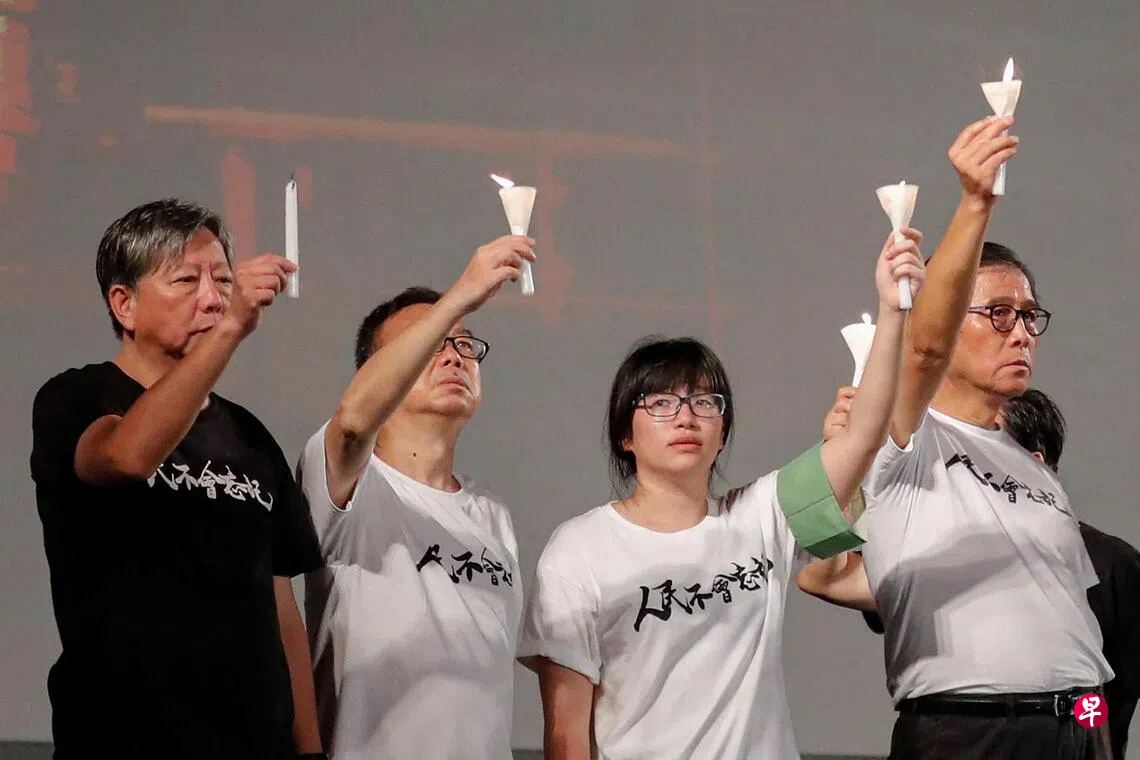
The Hong Kong Alliance in Support of Patriotic Democratic Movements of China and its former chairpersons and vice-chairpersons have been found guilty of “inciting subversion of state power.” At the heart of the case is precisely the Alliance’s long-standing platform calling for an “end to one-party rule.” This outcome raises a fundamental question: in a society that claims to be governed according to law, why is advocating a peaceful end to one-party rule and pursuing a democratic system considered a crime?
According to reports, the Alliance held candlelight vigils in Hong Kong on June 4 for 30 consecutive years. Its activities represented not only remembrance of history, but also questions about civil rights, political reform, and institutional accountability. Now, even expressing the political position of “ending one-party rule” has become central to a conviction. This shows that the boundaries of so-called “national security” are no longer defined by clear and foreseeable legal standards, but by those in power and their demands for political loyalty. If a regime regards criticism, commemoration, and calls for institutional reform as threats, what truly needs to be protected—is the country, or the power of the ruling party?
The problem lies not only in one case, nor only in Hong Kong. The common underlying ailment is the lack of checks on power under one-party rule: without genuine democratic elections, those in power need not obtain a mandate through open competition; the legislature, executive, and judiciary struggle to form effective checks and balances, while judicial independence faces institutional constraints; the space for journalism and free expression continues to shrink, making it difficult for the public to oversee the government through free discussion. When “the state” and “the ruling party” are conflated, opposition to one-party rule can easily be portrayed as “subversion of the state,” while civil rights are forced to give way to regime security.
Genuine and lasting national security should not be built on silencing, fear, and the erasure of historical memory. It should instead be founded on the consent of the people, transparent exercise of power, and protection of fundamental human rights. Constitutional democracy, separation of powers, judicial independence, free elections, and the freedoms of speech, association, and peaceful assembly are what allow political conflicts to be resolved through institutions rather than suppressed through criminal punishment.
The plight of the Alliance’s members reminds everyone that citizens are not passive subjects who must obey. Commemorating history, expressing dissent, and discussing what path the country should take are all matters of human dignity and civil rights. A system that cannot even tolerate the phrase “ending one-party rule” should reflect not on why the people speak out, but on why it is so afraid of the people speaking out.
News background: The original report on which this commentary is based can be found at BBC Chinese。