
This English version may have been machine-generated from the Chinese original and may not convey the original meaning accurately.
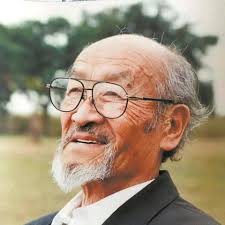
When Wang Luobin is mentioned, many people first think of “In That Faraway Place,” “The Girls from Daban City,” and “The Half Moon Rises.”
These melodies have endured across the decades, becoming an indelible part of China’s musical memory.
Yet few people know that this musician, known as the “King of Western Folk Songs,” was arrested, detained, and sentenced multiple times during his lifetime. He lived through political upheavals in different historical periods, lost his freedom, and endured the pain of a shattered family.
His songs remained in the world, while he himself spent long years confined behind bars.
一、1941年:因为“共产党嫌疑”被捕
I. 1941: Arrested on Suspicion of Communist Ties
In the 1940s, Wang Luobin actively participated in literary and artistic activities supporting the war against Japan and maintained contact with left-wing cultural figures.
In 1941, he was arrested on suspicion of having Communist connections and imprisoned in Lanzhou.
At the time, Wang Luobin was not a Communist Party member, but he lost his freedom because of political suspicion.
Even in prison, he did not give up music. According to relevant records, he continued, despite the difficult circumstances, to seek ways of expressing his emotions.
It was not until 1944 that he was released.
This experience was already heavy enough, but Wang Luobin may not have imagined that many years later he would once again endure a long period behind bars.
二、1951年:再次被捕,家庭遭受重创
II. 1951: Arrested Again as His Family Suffered a Devastating Blow
After 1949, Wang Luobin joined the People’s Liberation Army and entered Xinjiang with his unit, continuing to work in music and the arts.
However, his earlier service in the Ma Bufang system remained a historical issue that continued to affect his fate.
In 1950, Wang Luobin left Xinjiang for Beijing and later taught at Beijing No. 8 Middle School.
In 1951, he was arrested again and escorted back to Xinjiang.
At the same time, his family was also under enormous pressure.
As a result of this series of blows, Wang Luobin’s wife, Huang Jing, suffered deteriorating health and eventually died in 1951, leaving behind three children.
Her husband was arrested, she passed away, and their three children lost their mother.
This family tragedy became an indelible source of pain in Wang Luobin’s life.
In 1952, the Military Law Office of the Xinjiang Military Region sentenced him to two years of penal labor for such offenses as “being absent without leave for an extended period.” After his release in 1954, he returned to work in the arts.
However, this was not the last time he would lose his freedom.
三、1960年:15年重刑,命运再次被改变
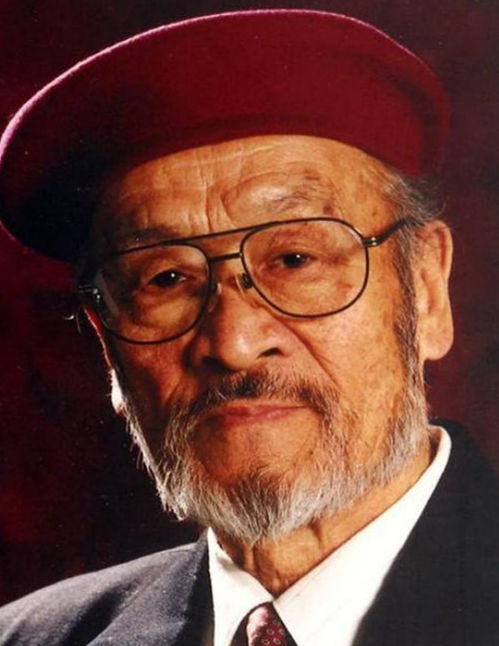
III. 1960: A 15-Year Sentence Changed His Fate Once Again
In 1960, Wang Luobin was arrested again.
In 1961, the Military Court of the Xinjiang Military Region sentenced him to 15 years in prison for such charges as “historical counterrevolutionary and current counterrevolutionary” offenses, and deprived him of his political rights for 20 years.
At the time, the accusations against him concerned musical works and stage productions, including the song “Salam, Chairman Mao” and the dance drama “The Great Military Competition.”
According to relevant historical records, “salam” was originally a word expressing greetings and respect. However, some people gave the song’s title a political interpretation at the time and used it as part of the case against him.
Wang Luobin was therefore once again plunged into a long period behind bars.
In 1962, he was granted parole and returned to work at his former institution; after leaving his post in 1965, he was rearrested and made to continue serving his sentence.
It was not until May 1975 that he completed his sentence and was released.
From his first arrest in 1941 to his final release in 1975, Wang Luobin’s fate was repeatedly altered by the political environment. His detention, penal labor, imprisonment, and parole constituted an exceptionally heavy chapter of his life.
四、铁窗之内,音乐仍然没有停止
IV. Behind Bars, the Music Never Stopped
The most unforgettable part of Wang Luobin’s story is not only the suffering he endured, but also the fact that he never gave up music even in adversity.
The prison held people from different parts of Xinjiang and different ethnic groups.
Wang Luobin interacted with them, listened to them sing, recorded their melodies and lyrics, and compiled and adapted folk songs.
To others, prison meant confinement, restrictions, and the loss of freedom.
For someone who had devoted himself to music for many years, however, those songs from different ethnic groups and regions also became an important way to learn about folk music.
Of course, this should not be taken as an attempt to romanticize the suffering caused by imprisonment.
The musical gains could not offset the price of losing one’s freedom, much less make up for the pain a family suffered through prolonged separation.
But Wang Luobin’s experience at least shows that even in extremely difficult circumstances, he continued striving to preserve his connection with music.
The body can be imprisoned, but a person’s creativity does not necessarily disappear as a result.
五、1975年出狱,1979年撤销原判
V. Released in 1975, Original Verdict Overturned in 1979
In 1975, 62-year-old Wang Luobin was released after completing his sentence.
However, being released from prison did not mean that all the problems had been resolved.
He still faced difficulties in life and work, and the previous verdict was not immediately corrected.
On November 29, 1979, after reviewing the case, the Military Court of the Ürümqi Military Region overturned the verdict issued against Wang Luobin in 1961.
The relevant ruling stated that none of the issues on which the original verdict was based could be substantiated.
On July 6, 1981, the Xinjiang Military Region held a rehabilitation ceremony for Wang Luobin, restoring his reputation and military status.
By then, 20 years had passed since the 1961 verdict.
The accusations of that time were finally overturned, but time could not be turned back.
The freedom Wang Luobin had lost, the years he could have spent with his family, and the pain caused by his wife’s death could never return simply because of a formal decision clearing his name.
A long-delayed rehabilitation can correct a historical verdict, but it cannot restore a life that has already been lost.
六、最后留下来的,是那些歌
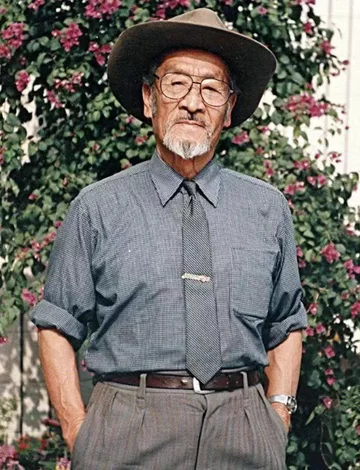
VI. What Remained in the End Were the Songs
After his rehabilitation, Wang Luobin continued to compose music.
His works gradually reached a wider audience, and songs such as “In That Faraway Place” and “The Girls from Daban City” became familiar to and were sung by increasing numbers of people.
On March 14, 1996, Wang Luobin died in Ürümqi at the age of 82.
Looking back on his life, there was war, there were political campaigns, there was prison, there was family tragedy, and there was a long wait.
He was once branded with political labels and given a heavy sentence; many years later, the original verdict was overturned and his reputation restored.
But when people sing his songs again today, what remains is not the accusations of that time, but melodies that have crossed regions, ethnicities, and eras.
This is also the most moving part of Wang Luobin’s story:
A person’s political fate may be changed by the times, but the works he leaves behind may transcend them.
七、为什么公道必须迟到这么多年?
VII. Why Did Justice Have to Be Delayed for So Many Years?
Wang Luobin’s experience should not be read merely as the legendary life of a musician.
It also raises several questions worthy of serious consideration.
When a person loses his freedom because of political suspicion, can he receive a full opportunity to defend himself?
When an accusation is based on a political interpretation of a work, statement, or stage performance, can the relevant evidence withstand scrutiny?
When a verdict is ultimately overturned, who bears responsibility for the time and life lost in correcting the error?
Wang Luobin’s original verdict was overturned in 1979, and he was formally rehabilitated in 1981. This history reminds us that although judicial error correction is important, whether correction mechanisms can function in a timely manner deserves equal attention.
No one should have their freedom easily taken away merely because of some political suspicion.
A criminal accusation should not replace an examination of specific facts and evidence.
A society truly worthy of respect must not only correct errors after they occur; it should also establish institutions capable of preventing errors and effectively safeguarding individual rights.
八、记住他的歌,也记住歌声背后的历史
VIII. Remember His Songs, and Remember the History Behind Them
We remember Wang Luobin not only because he wrote beautiful melodies.
We remember him also because his life reminds us that freedom cannot be taken for granted, and dignity should not depend on permission from those in power.
When a person’s innocence must wait many years to be confirmed, and when a decision rehabilitating someone cannot recover the years already lost, history leaves behind not only an individual tragedy but also questions worthy of reflection by society.
“In That Faraway Place” is still being sung.
“The Girls from Daban City” is still being sung.
These songs record people’s yearning for life, love, and a beautiful world.
Yet behind the songs, we should not forget the musician who lost his freedom repeatedly and waited until late in life for formal rehabilitation.
Bars can restrict a person’s movements, but they may not be able to erase his songs.
But a society that truly respects human beings should not make anyone sacrifice long years of freedom before receiving long-delayed justice.
May we remember the melodies Wang Luobin left behind, and also remember the history he endured.
Because only when the suffering in history is remembered seriously will individual dignity and freedom not become empty words.