
This English version may have been machine-generated from the Chinese original and may not convey the original meaning accurately.
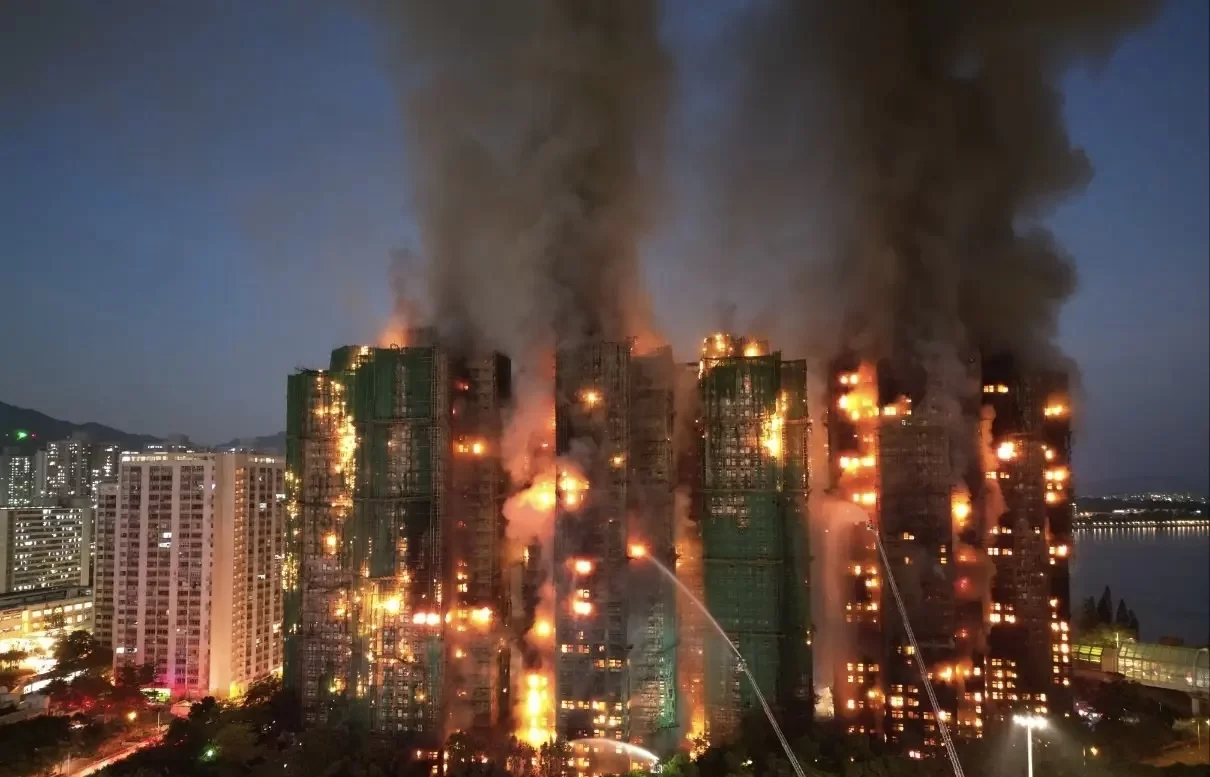
A fire at Wang Fuk Court in Hong Kong destroyed not only homes, but also exposed the deep-seated pathology of a society under an imbalanced power structure. According to reports, eight months on, two interviewed disaster victims still have no confidence that the hearings and owners' meetings can deliver justice — one important reason being that they feel forced to "sell off cheaply" their property rights, and an even more fundamental reason: to this day, not a single official has been held accountable for the disaster.
These two phenomena may appear to belong to separate realms — "private dispute" and "administrative responsibility" — but in reality they share the same origin and structure. The reason disaster victims find themselves in a weak position in property transactions, feeling compelled to submit, is essentially because the entire post-disaster mechanism — from the formulation of reconstruction plans and the setting of compensation standards, to the procedural design of hearings and owners' meetings — is dominated top-down by the administration, leaving ordinary residents without real bargaining power or institutional safeguards. When the power structure itself lacks transparency and checks, victims can only passively accept the "rules of the game" in a contest marked by asymmetric information and unequal resources.
The absence of official accountability reveals an even deeper institutional flaw. A fire causing major loss of life and property should, by rights, trigger an independent and transparent investigation to clarify where responsibility lies across regulatory dereliction, fire safety approval processes, and property management lapses, and to hold the relevant officials accountable through judicial or legislative bodies. Yet, according to reports, this chain of accountability has failed to get underway in eight months. This is not accidental administrative delay, but the inevitable result of power unchecked by external oversight: when officials' appointments and career prospects do not depend on a vote of confidence from the electorate, when the legislature cannot effectively supervise the executive branch, and when the independence of the judicial system itself has been continually eroded under political pressure, "accountability" becomes nothing more than a slogan rather than an enforceable institutional arrangement.
What deserves even greater vigilance is that the disaster victims' "lack of confidence" in the hearings and owners' meetings precisely reflects the erosion of Hong Kong citizens' trust in the entire public deliberation mechanism. This crisis of trust is not an isolated incident, but a microcosm of the continuous narrowing of press freedom, judicial independence, and civil society space in Hong Kong in recent years. When media oversight is weak, when citizens cannot remove derelict officials through free elections, and when channels for judicial redress are increasingly restricted, ordinary citizens facing the combined squeeze of power and capital have almost no choice but to silently endure.
The tragedy of Wang Fuk Court reminds us: what can truly safeguard the dignity and rights of disaster victims has never been the "goodwill" of a single hearing, but rather an entire system of constitutional democratic design — a judiciary independent of executive power, a legislature that can genuinely represent public opinion and check the government, press freedom free from control, and legal space for citizens to organize and express dissent. Only when power can truly be held accountable, when the judiciary can rule independently, and when the media can freely expose wrongdoing, will disaster victims no longer have to fight alone in the "psychological warfare of selling property rights," and officials' dereliction of duty will no longer vanish silently under institutional protection.
Fires can be extinguished, but if the institutional black hole is not filled, the victims of the next disaster will still be ordinary people.
News Background: The original report on which this commentary is based can be found at Deutsche Welle: DW-WORLD.DE.