This English version may have been machine-generated from the Chinese original and may not convey the original meaning accurately.
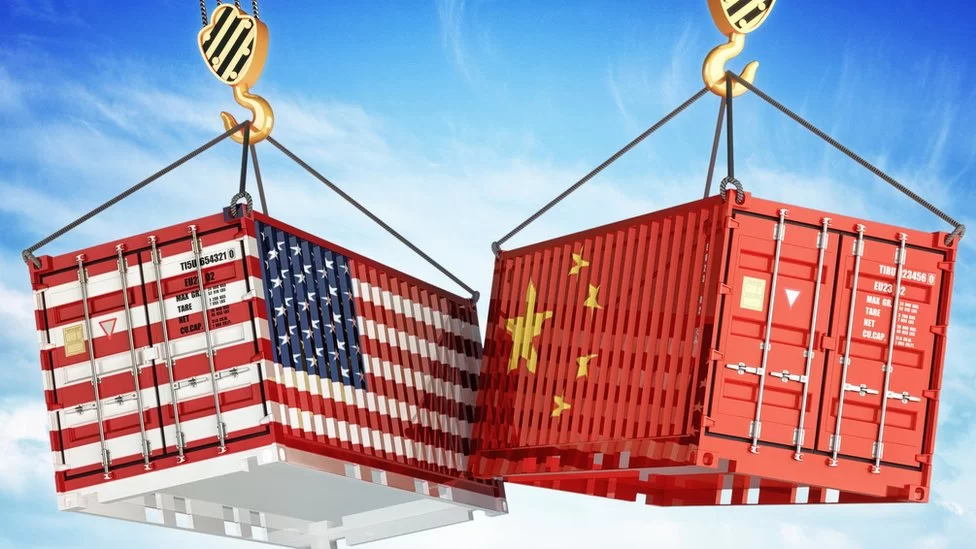
According to reports, Beijing is considering arranging for a delegation of representatives from major enterprises to accompany Xi Jinping on his visit to the United States, but the plan, list of participants, and itinerary have not yet been finalized. If the trip takes place, it would be more than an economic and trade diplomatic event; it would also expose the long-unresolved relationship between China’s economy and state power: whether companies can travel abroad and sign contracts often depends on the political judgment of the top leadership, rather than on stable, transparent, and predictable legal and market rules.
Including commercial orders in head-of-state diplomacy may help ease tensions in the short term. China could potentially purchase U.S. agricultural products and energy, encourage Chinese companies to invest in the United States, and even exchange leverage over issues such as rare-earth supplies, tariffs, and nontariff barriers; the United States, for its part, may also seek to expand agricultural sales to China. But the limitations of such arrangements are equally clear: if agreements rely primarily on personal commitments by the leaders of the two countries, while lacking public rules, congressional oversight, judicial remedies, and public participation, their implementation can easily change with the political winds. The statement cited in the material that “even if the central authorities make a decision, it may change at any time” shows precisely that this uncertainty is not accidental, but rather a consequence of a system in which power is highly centralized.
More worthy of scrutiny is this question: Why does Beijing need entrepreneurs to lend diplomatic credibility on the one hand, while finding it difficult to dispel outside concerns about the circumstances facing private enterprises on the other? The material mentions that entrepreneurs such as Ren Zhiqiang and Sun Dawu remain imprisoned; since 2020, the technology, education, and real-estate sectors have also undergone crackdowns. Regardless of how specific cases are assessed, if entrepreneurs cannot be confident that their property rights, business rights, and personal rights are protected by an independent judiciary, it will be difficult to form genuinely stable long-term expectations. Bringing entrepreneurs on overseas visits can demonstrate a willingness to cooperate, but it cannot substitute for institutional credibility.
The root of the problem lies not in how many orders a particular visit can secure, but in the fact that under one-party rule, power lacks effective checks and balances; there are no democratic elections, freedom of the press or expression, and the judiciary cannot independently review the exercise of public power. Without public accountability, national strategy can easily be driven by individual will and political needs; without the separation of powers, commercial cooperation may also degenerate into a diplomatic tool rather than a legally protected contract between equal parties.
What China-U.S. relations truly need is not more “head-of-state deals,” but more reliable institutional arrangements. Only by establishing constitutional democracy, the separation of powers, and judicial independence, while protecting the property rights, right to express opinions, and personal freedom of enterprises and citizens, can the government’s external commitments possess continuity, and can enterprises avoid depending on power in order to feel secure. Behind every order lies a choice between dignity, freedom, and the rule of law; what citizens should ask is not merely what agreements the state has signed, but who has the authority to decide, who will provide oversight, and whether ordinary people can receive equal protection under the law.
News background: The original report on which this commentary is based can be found at Radio Free Asia Mandarin.