
This English version may have been machine-generated from the Chinese original and may not convey the original meaning accurately.
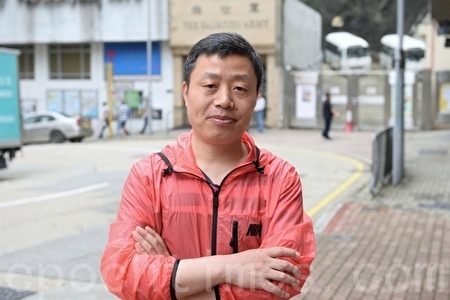
Du Bin was sentenced to one year and six months in prison for approximately 40 tweets that reposted or commented on current affairs; according to reports, his family has still not received the verdict or any notification from the court, and does not even know where he is currently being held. When his mother was critically ill and nearing death, the family applied for him to return home to see her one last time, but that request was also denied. If these accounts are true, this is not merely one person’s ordeal, but a concentrated reflection of the predicament of China’s judicial system and citizens’ rights.
First, “picking quarrels and provoking trouble” is inherently a vaguely defined offense that is extremely susceptible to expansive application. When dozens of comments on current affairs can become the basis for a conviction, while “attacking national leaders” is not even an official offense under the Criminal Law, the law is no longer a measure for constraining power, but may instead become a tool for punishing critics. Questioning public figures and public policies should fall within the scope of freedom of speech and public debate. Even if speech is suspected of defamation, it should be handled through clearly defined laws, independent procedures, and sufficient evidence—not by turning a private reputational dispute into a public prosecution simply because the target of criticism is powerful and prominent.
Even more troubling is the process itself: the case has been labeled “involving state secrets,” making it difficult for the family to learn the details; after the verdict, the family did not receive any official documents; and they have been unable to obtain direct confirmation of whether the defendant will appeal. If the judiciary cannot be open, transparent, and subject to appeal, it becomes difficult for the public to believe that a trial is intended to establish the facts rather than implement a predetermined conclusion. The fact that even whether a person may see his mother before her death can be decided by the authorities handling the case with a simple “no” shows that personal dignity and family rights lack meaningful remedies in the face of power.
The common underlying disease in such incidents is not merely the abuse of a particular offense, nor merely the indifference of individual officials, but the lack of genuine checks on power under one-party rule: there is no accountability arising from democratic elections, no courts independent of the administration and party authority, no free press to provide oversight, and no institutions capable of effectively challenging public power. Those in power can influence legislation and law enforcement while also using the judiciary to suppress criticism, making it naturally difficult for citizens to obtain equal protection.
The true solution is not to ask those in power to “show mercy,” but to establish constitutional democracy, the separation of powers, and judicial independence; to clearly safeguard basic rights such as freedom of speech, freedom of the press, the right to know, the right to appeal, and family reunification; and to ensure that all public power is subject to oversight by the law, the courts, the media, and citizens. Du Bin’s ordeal reminds us that freedom is not a privilege reserved for a few, but the baseline that allows every person to retain dignity, a voice, and the ability to seek justice when confronted by the machinery of the state.
News background: The original report on which this commentary is based can be found at Radio Free Asia Mandarin。